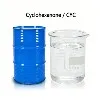

Basic Introduction to Mono Ethylene Glycol
Mono Ethylene Glycol (EG,MEG), also known as ethylene glycol in chemical terminology, is a widely used industrial organic diol and basic chemical raw material.
In industrial practice, MEG appears as a colorless, transparent, slightly viscous liquid. It is hygroscopic and toxic if ingested, and is therefore handled under standard chemical safety procedures.
Its physical properties, especially boiling point, play an important role in determining its processing conditions, separation methods, and industrial application scenarios.

Standard Boiling Point Data of MEG
The standard atmospheric boiling point of pure mono ethylene glycol is 197.3°C.
In practical industrial environments, the boiling point may vary under different operating conditions:
- Under vacuum or reduced pressure conditions, the boiling point decreases significantly, which is commonly utilized in distillation and purification processes.
- When mixed with water, the boiling point behavior changes depending on the mixing ratio and system composition.
- At higher altitudes where atmospheric pressure is lower, the effective boiling point is also reduced compared to standard conditions.
Compared with common solvents such as water, ethanol, and methanol, MEG has a significantly higher boiling point, which classifies it as a high-boiling organic compound. This property is one of its key advantages in industrial applications.
Properties of Mono Ethylene Glycol (MEG)
mono ethylene glycol physical properties
| Property | Value |
|---|---|
| Molecular Formula | C₂H₆O₂ |
| Relative Molecular Mass | 62.07 |
| Density | 1.113 g/cm³ at 20°C |
| Freezing Point | -12.6°C |
| Flash Point | 111.1°C |
| Solubility | Fully miscible with water, ethanol, and acetone; limited in non-polar hydrocarbons and oils |
| Volatility | Low under normal conditions, minimal evaporation in closed systems |
mono ethylene glycol Chemical Characteristics
| Chemical Feature | Description |
|---|---|
| Functional Groups | Contains two hydroxyl groups (-OH) |
| Thermal Oxidation Behavior | Gradual oxidation at ~80–90°C forming glycolic acid and oxalic acid |
| Freezing Point Depression | Strong reduction of freezing point when mixed with water |
| Chemical Compatibility | Compatible with most polar solvents; stable in mixed formulation systems |
Characteristics Brought by High Boiling Point of MEG
High Temperature Stability in Industrial Use
Due to its boiling point of 197.3°C, mono ethylene glycol 107-21-1 remains in liquid state under most conventional industrial operating temperatures.
In closed-loop systems, this reduces evaporation loss and helps maintain long-term fluid stability, especially in continuous circulation processes.
Stable Heat Transfer Performance
The high boiling point allows MEG-based heat transfer fluids to operate within medium and high temperature ranges without phase change issues such as boiling or vapor formation.
In industrial systems, this supports stable heat exchange efficiency and consistent temperature control performance.
Separation and Purification Efficiency
In chemical processing and refining operations, the significant boiling point difference between MEG and low-boiling impurities is used for separation.
Vacuum distillation is commonly applied to remove water and light components, enabling the production of high-purity fiber-grade and bottle-grade MEG.
Low Volatility and Operational Efficiency
In antifreeze and circulating systems, the low volatility associated with high boiling point reduces fluid loss during operation.
This helps reduce replenishment frequency and improves long-term operational stability in industrial cooling systems.
Main Industrial Uses Based on Boiling Point Characteristics
Polyester Raw Material Industry
In polyester production systems, MEG is reacted with terephthalic acid (PTA) under controlled high-temperature and high-pressure conditions.
Its high boiling point supports stable reaction environments, ensuring consistent polymerization behavior and product quality in polyester fiber and PET production.

Industrial Antifreeze and Cooling Systems
MEG is commonly used in water-based antifreeze formulations.
In practical applications, its high boiling point helps prevent boiling loss under high-temperature operation, while its low freezing point provides protection under low-temperature conditions.
It is widely used in:
- Automotive engine cooling systems
- Industrial heat exchange systems
- HVAC and refrigeration systems
- De-icing applications

Heat Transfer Media Applications
In chemical and energy industries, MEG is used as an intermediate component in heat transfer fluids.
It maintains stable circulation performance over a wide temperature range and is suitable for controlled heating and cooling processes in industrial production lines.
Industrial Solvent and Humectant Applications
MEG is used as a high-boiling solvent in coatings, inks, adhesives, and dye systems.
In industrial drying processes, its low volatility helps improve film formation quality and surface uniformity.
It is also used as a humectant in leather processing and selected chemical formulations.

Gas Dehydration and Chemical Synthesis
In gas processing systems, mono ethylene glycol meg is used for moisture removal to prevent pipeline blockage and hydrate formation.
It is also widely used as an intermediate in the production of glycol ethers, glyoxal, and other fine chemical products. In these systems, boiling point control is an important parameter for separation and reaction design.

Operational Considerations Related to Boiling Point
MEG boiling point is 197.3°C, which determines its low volatility behavior in industrial thermal systems.
In open heating systems, MEG may experience evaporation loss when operating close to its boiling point (197.3°C), while water (100°C) evaporates significantly earlier, making MEG more stable under high-temperature conditions.
In vacuum distillation, reducing system pressure can lower the effective boiling point of MEG from 197.3°C to well below 150°C, enabling lower-temperature separation and reducing thermal degradation risk.
In circulating systems, long-term operation above 80–90°C accelerates oxidation reactions, forming glycolic acid and oxalic acid, which may increase system acidity and require periodic monitoring.
MEG has a flash point of 111.1°C and is classified as toxic if ingested, requiring standard PPE including gloves and goggles during handling.
Summary
Mono Ethylene Glycol (EG,MEG) has a standard boiling point of 197.3°C, which is significantly higher than ethanol (78.3°C) and water (100°C), giving it strong thermal stability in industrial systems.
In industrial practice, MEG is widely used in polyester production (>87% consumption share), antifreeze formulations (freezing point -12.6°C), heat transfer fluids, and chemical synthesis due to its stable high-boiling-point behavior and low volatility.