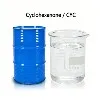


Cyclohexanone (C₆H₁₀O) is primarily used as an industrial intermediate for manufacturing adipic acid and caprolactam, two essential chemicals in nylon production. It also serves as a high-boiling solvent for coatings, paints, adhesives, inks, and specialty resins due to its excellent solvency and chemical stability. Because of its versatile reactivity and mature global supply chain, cyclohexanone remains one of the world's most important ketone intermediates for polymer, pharmaceutical, and fine chemical manufacturing.

What Is Cyclohexanone?
Cyclohexanone (CAS 108-94-1) is a colorless-to-pale-yellow liquid ketone, produced industrially either by catalytic oxidation of cyclohexane or by hydrogenation of phenol. It is the starting intermediate for two of the world's largest-volume nylon precursors - adipic acid and caprolactam - which is why it sits near the center of the global polyamide supply chain.

cyclohexanone physical properties
| Property | Value |
|---|---|
| CAS Number | 108-94-1 |
| Molecular Formula | C₆H₁₀O |
| Molecular Weight | 98.15 g/mol |
| Appearance | Colorless to pale yellow liquid |
| Boiling Point | 155–156°C |
| Density | 0.947 g/cm³ |
| Flash Point | 44°C (closed cup) |
| Solubility | Slightly soluble in water (~3.75% w/w at 25°C); miscible with most organic solvents |
What Is Cyclohexanone Used For?
Main Uses Summary
| Application | Importance | End Products |
|---|---|---|
| Adipic Acid | ★★★★★ | Nylon 6,6 |
| Caprolactam | ★★★★★ | Nylon 6 |
| Solvent | ★★★★☆ | Paints & Coatings |
| Pharmaceuticals | ★★★★☆ | Drug Intermediates |
| Agrochemicals | ★★★★☆ | Pesticides |
| Fine Chemicals | ★★★★☆ | Organic Synthesis |
Industry market reports consistently show that caprolactam and adipic acid together dominate cyclohexanone consumption. Independent 2024–2025 market analyses put caprolactam alone at roughly 60–68% of global cyclohexanone demand, and combined nylon-6 / nylon-6,6 intermediate use (caprolactam + adipic acid together) at approximately 70% of total global consumption, with the remainder split mainly between solvent applications (paints, coatings, adhesives, inks) and smaller specialty uses in pharmaceuticals and agrochemicals.

Why Is Cyclohexanone Important in Industry?
| Advantage | Why It Matters |
|---|---|
| Excellent chemical intermediate | Its ring structure opens cleanly under oxidation to give a linear six-carbon diacid (adipic acid) - exactly the chain length nylon 6,6 needs |
| Balanced solvent polarity | Moderate polarity dissolves both polar resins and non-polar rubbers/waxes, which few single solvents can do |
| High boiling point (155–156°C) | Slower evaporation than acetone or MEK gives better film formation and leveling in coatings |
| Excellent resin compatibility | Strong dissolving power for PVC, vinyl, and cellulosic resins used in adhesives and inks |
| Mature production technology | Decades of process optimization (cyclohexane oxidation and phenol hydrogenation routes) keep production costs predictable and scalable |
| Global availability | Multiple production routes and a large base of Asia-Pacific, North American, and European producers reduce single-source supply risk |
In short, cyclohexanone isn't used by default - it's used because no cheaper, equally scalable ketone gives the same combination of ring-opening chemistry (for adipic acid/caprolactam) and solvency (for coatings/adhesives) in one molecule.
Major Industrial Applications of Cyclohexanone
| Industry | Purpose | Why Cyclohexanone? |
|---|---|---|
| Nylon Manufacturing | Chemical intermediate | High conversion efficiency to adipic acid and caprolactam |
| Paints & Coatings | Solvent | Slow evaporation gives smooth, defect-free films |
| Adhesives | Solvent | Strong dissolving power for resins and polymers |
| PVC Processing | Processing solvent | Excellent compatibility with vinyl resins |
| Pharmaceuticals | Synthesis intermediate | Versatile ketone chemistry for ring-forming reactions |
| Agrochemicals | Synthesis intermediate | Easy functionalization for pesticide/herbicide intermediates |
Nylon manufacturing is by far the largest consumer of cyclohexanone by volume - global cyclohexanone demand has been estimated at over 3.7 million metric tons annually, with the majority feeding directly into caprolactam and adipic acid plants that are frequently co-located with cyclohexanone production for logistics efficiency. Paints and coatings use cyclohexanone specifically for its slow evaporation rate, which allows applied films to level out before drying, reducing brush marks and orange-peel texture. Adhesives and PVC processing rely on its strength as a solvent for vinyl and cellulosic polymers, where weaker solvents like acetone fail to fully dissolve the resin. In pharmaceuticals and agrochemicals, cyclohexanone serves as a smaller-volume but technically important building block, valued for how easily its ring and carbonyl group can be functionalized into more complex molecules.
Cyclohexanone in Adipic Acid Production
Industry Flow
Cyclohexane
↓
KA Oil (cyclohexanol/cyclohexanone mixture)
↓
Cyclohexanone
↓
Nitric Acid Oxidation / Green Oxidation (H₂O₂, catalytic O₂)
↓
Adipic Acid
↓
Nylon 6,6
Why produce adipic acid: Adipic acid is the six-carbon dicarboxylic acid that reacts with hexamethylenediamine to form nylon 6,6 through polycondensation. Cyclohexanone (via oxidative ring cleavage) is the most direct, scalable route to that six-carbon chain.
Why nylon 6,6 specifically: Nylon 6,6 offers a higher melting point and better dimensional stability than nylon 6, making it the preferred grade for automotive engineering plastics, airbags, and high-performance textiles.
Global market: U.S. adipic acid consumption alone represented an estimated 30–35% of global demand as of 2023, with carpet manufacturing accounting for roughly 30% of U.S. adipic acid demand specifically - reflecting how concentrated end-use demand can be within a single downstream application.
Green process shift: The traditional nitric acid oxidation route produces nitrous oxide (N₂O) as a byproduct, a potent greenhouse gas, which is driving industry investment in hydrogen-peroxide/tungstate-catalyzed and catalytic-oxygen oxidation routes as lower-emission alternatives (see our companion article, Is Cyclohexanone Easy to Oxidize?, for mechanism detail).
Cyclohexanone in Caprolactam Production
Cyclohexanone is a key raw material for caprolactam production, where it is converted into caprolactam through oxime formation and Beckmann rearrangement. Caprolactam is the primary monomer for Nylon 6 manufacturing, making cyclohexanone an important link in the global nylon supply chain.
Cyclohexanone
↓
Cyclohexanone Oxime (reaction with hydroxylamine)
↓
Beckmann Rearrangement
↓
Caprolactam
↓
Nylon 6
Oxime formation: Cyclohexanone reacts with hydroxylamine (or hydroxylamine sulfate) to form cyclohexanone oxime, the first step toward ring-expansion chemistry.
Beckmann rearrangement: Under acid catalysis (traditionally oleum/sulfuric acid; increasingly zeolite-catalyzed vapor-phase processes), the oxime undergoes a Beckmann rearrangement - the C=N bond migrates into the ring, converting the six-membered carbocycle into a seven-membered lactam ring.
Industrial importance: Caprolactam accounted for the largest single application share of the global cyclohexanone market - independent 2024–2025 industry reports place it at roughly 60–68% of total cyclohexanone consumption, making it the dominant driver of cyclohexanone demand worldwide.
Applications: Caprolactam is polymerized into nylon 6, used extensively in textile fibers, carpets, engineering resins, and industrial yarns - with roughly a quarter of nylon 6 output going into engineering resins and the remainder into fiber applications, according to industry market data.
Cyclohexanone as a High-Performance Industrial Solvent
| Application | Why Cyclohexanone Is Used |
|---|---|
| Paints | Excellent film formation, minimal brush-mark retention |
| Coatings | High boiling point extends open time for smoother finishes |
| Printing Inks | Good pigment dispersion and wetting |
| Adhesives | Strong resin compatibility across vinyl and cellulosic types |
| PVC | Powerful solvent strength for vinyl resin processing |
Why not acetone? Acetone evaporates far faster (boiling point ~56°C vs. cyclohexanone's ~155–156°C), which means it flashes off before a coating film can level out - leading to defects like orange peel or poor gloss. Cyclohexanone's slower evaporation gives formulators more working time, which is why it's specifically chosen over acetone or MEK in higher-end coatings, inks, and adhesive formulations, even though acetone is cheaper and more available.
Other Chemical Manufacturing Applications
| Application | Use Case |
|---|---|
| Pharmaceuticals | Synthesis intermediate for drug precursors and specialty ketone chemistry |
| Electronic Chemicals | High-purity solvent grades for cleaning and processing in electronics manufacturing |
| Agrochemicals | Precursor in pesticide and herbicide intermediate synthesis |
| Rubber Chemicals | Solvent for dissolving crude rubber during compounding |
| Plasticizers | Feedstock chemistry adjacent to adipic-acid-based plasticizer production |
| Specialty Chemicals | General-purpose ketone reagent in fine organic synthesis |
Cyclohexanone vs Other Ketone Solvents
| Property | Cyclohexanone | Acetone | MEK |
|---|---|---|---|
| Boiling Point | ★★★★★ (155–156°C) | ★★ (56°C) | ★★★ (80°C) |
| Solvent Power | ★★★★★ | ★★★★ | ★★★★ |
| Evaporation Rate | Low | High | Medium |
| Nylon Intermediate | Yes | No | No |
This is the differentiator that matters most for buyers evaluating solvent alternatives: cyclohexanone is the only one of the three that also functions as a nylon-chain intermediate. That dual role - high-performance solvent and polymer precursor - is unique among common ketone solvents and is a major reason integrated chemical producers keep cyclohexanone capacity even when other solvents are cheaper for pure cleaning/degreasing applications.
Storage, Packaging, and Transportation
A practical guide for procurement and logistics teams:
- Storage: Store in tightly sealed, corrosion-resistant containers at room temperature, away from heat sources, open flame, and strong oxidizers. Bulk storage commonly uses a nitrogen blanket to reduce headspace oxygen and fire risk.
- Packaging: Typically shipped in steel drums, IBC totes, or ISO tank containers for bulk volumes; containers should use rubber seals resistant to cyclohexanone to prevent leakage.
- Shelf Life: Cyclohexanone is chemically stable under normal storage conditions and does not readily form peroxides the way some ethers do; typical shelf life in sealed containers is measured in years, though color/purity should be checked against the supplier's Certificate of Analysis (COA) for long-held stock.
- Transportation classification: UN Number 1915, Hazard Class 3 (flammable liquid), Packing Group III under DOT, IMDG, and IATA regulations.
- Flash Point: 44°C (closed cup) - classified as a flammable liquid requiring standard Class 3 handling precautions (grounding/bonding during transfer, non-sparking tools, ignition source control).
- Safety: Causes skin and eye irritation and may cause respiratory irritation on inhalation; standard PPE (gloves, goggles, ventilation) is required during handling per SDS guidance.

Frequently Asked Questions
What is cyclohexanone mainly used for?
Primarily as a chemical intermediate for caprolactam (nylon 6) and adipic acid (nylon 6,6) production, and secondarily as a high-boiling-point solvent in paints, coatings, adhesives, and inks.
Is cyclohexanone used in nylon production?
Yes - it is the starting material for both major nylon precursors: caprolactam (via oxime formation and Beckmann rearrangement) for nylon 6, and adipic acid (via oxidative ring cleavage) for nylon 6,6.
How is cyclohexanone converted into adipic acid?
Through oxidative ring-opening, traditionally using nitric acid with copper/vanadium catalysts, or increasingly via hydrogen peroxide with tungstate catalysts or catalytic molecular oxygen, which cleave the ring C–C bond to yield the linear six-carbon diacid.
How is caprolactam produced?
Cyclohexanone reacts with hydroxylamine to form cyclohexanone oxime, which then undergoes an acid-catalyzed Beckmann rearrangement to expand the six-membered ring into the seven-membered lactam ring of caprolactam.
Is cyclohexanone a good solvent?
Yes. Its high boiling point (155–156°C) and broad resin compatibility make it especially effective in paints, coatings, printing inks, and adhesive formulations where slower evaporation improves film quality.
Why is cyclohexanone important in industry?
Because it uniquely combines two roles - a precursor for the world's largest-volume synthetic fiber (nylon) and a high-performance industrial solvent - supported by mature, large-scale production technology.
Which industries consume the most cyclohexanone?
Nylon manufacturing (caprolactam and adipic acid production combined) accounts for the large majority of global consumption - commonly cited at around 70% across recent industry reports - followed by paints/coatings, adhesives, pharmaceuticals, and agrochemicals.
What purity is used for industrial applications?
Technical grade cyclohexanone (commonly >99% purity) is standard for large-scale nylon and solvent applications; higher-purity reagent grades are used for pharmaceutical or specialty synthesis where trace impurities affect downstream reactions.
How should cyclohexanone be stored?
In sealed, corrosion-resistant containers at room temperature, away from heat, ignition sources, and strong oxidizers, with a nitrogen blanket recommended for bulk storage to reduce fire risk and oxidative degradation.
Where can I buy bulk cyclohexanone?
Bulk cyclohexanone should be sourced from qualified suppliers providing batch COA, SDS, TDS, ISO certification, and export compliance. Tianjin Gnee Biotech Co., Ltd. supplies industrial-grade cyclohexanone (CAS 108-94-1) with quality documents and global export experience.