


Petrochemicals
Why Choose Us?
Rich Experience
Since 2016, we have a rich history and experience in producing chemical raw materials, and have developed into a comprehensive chemical enterprise integrating scientific research, development, production, sales and service.
Professional Team
The company has more than 200 employees, professional and technical personnel accounted for more than 40% of its excellent quality and leading position in the industry to stand out.
Quality Control
We adhere to the principle of "Quality First" and have obtained ISO 9001 certification. We have also set up a special testing center for chemical raw materials and implemented strict quality control standards at all stages of the production process.
One-stop Servic
We provide comprehensive one-stop services, including packaging design, basic raw material production and manufacturing, quality control and after-sales service, to ensure product quality and customer satisfaction throughout the process.
Chemical obtained either directly from cracking (pyrolysis), or indirectly from chemical processing of petroleum Oil or natural gas. Major petrochemicals are acetylene, benzene, ethane, ethylene, methane, propane, and hydrogen, from which hundreds of other chemicals are derived. These derivatives are used as elastomers, fibers, plasticizers, and solvents, and as feedstock for production of thousands of other products.


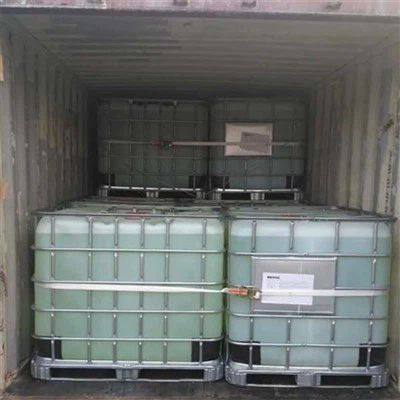


Predictive maintenance
Advanced analytics offers significant benefits to the petrochemical industry, with predictive maintenance being an important aspect of it. Through this technique, companies leverage sensor data and other sources to detect possible equipment failures before they occur. This proactive approach allows them to prevent downtime, increase productivity, and save costs.
For example, the oil and gas upstream industry use the "Christmas trees" – a set of valves and gauges used to control the flow of oil and gas coming from a wellhead. By employing predictive maintenance, these companies can monitor the equipment's performance and identify any signs of wear or failure. This information can then be used to schedule maintenance at the optimal moment, preventing the need for costly repairs, and also reducing the risk of unplanned downtime.
Process optimization
Another benefit of applying advanced analytics in the petrochemical industry is the opportunity for process optimization. Real-time data analysis enables companies to enhance production processes, minimize waste, and improve product quality. With this, machine learning algorithms can detect patterns and trends that might be challenging for humans to identify.
By utilizing advanced analytics, different industries can monitor their production processes in real time, detect any deviations from optimal conditions, and adjust machine parameters (such as temperature and pressure) through machine learning algorithms automatically. This approach can reduce waste, improve product quality, and increase efficiency.
Environmental impact analysis
Advanced analytics can be used to help petrochemical companies reduce their environmental impact. By analyzing data on factors such as energy consumption and waste production, companies can identify areas where they can make improvements.
For example, it is possible to monitor energy consumption during the production process of different products and identify areas where energy is being wasted. This information can then be used to make adjustments to the process, such as optimizing equipment settings, to reduce energy consumption or lower carbon emissions.

The petrochemical manufacturing process begins with a "feedstock".
A feedstock is a raw material that is used to make a useful product in an industrial process. Natural gas liquids and naphtha that is created from crude oil during the refining process are used as feedstocks to manufacture a wide variety of petrochemicals.
When using natural gas liquids to create petrochemicals, we separate it into ethane, propane and butanes.
Most people know propane as what you use to power your barbeque and butane as what fuels your lighter. They can also be used as feedstocks to create petrochemicals. Ethane is an important feedstock because its structure is the simplest of the hydrocarbons, and it can be transformed into novel plastics that have remarkable and useful properties.
Ethane is first converted to ethylene using a process called cracking.
Ethane is fed into a large, complex piece of equipment called a cracker. It uses high temperatures to crack the bonds between carbons. Physics then takes over, and the carbons form two bonds (also known as a double-bond) with each other that make a new hydrocarbon molecule called ethylene.
Propane and butane undergo additional processes to make propylene and butylenes (e.g., butadienes).
Propane and butane can be cracked to make propylene and butylenes, the same way ethane is cracked to make ethylene. They can also undergo a newer process that plucks hydrogen atoms from them to form the double-bonds.
Ethylene, propylene and butylenes, along with benzene, toluene and xylenes, are the fundamental building blocks of plastics.
These six petrochemicals can be made into plastics, nylons, polyesters, etc., that are then transformed into items like bicycle helmets, lightweight car bumpers, space suits, medical devices and wind turbines.
Petrochemicals don't just make plastic; they also enable progress.
These chemicals and the specialty chemicals created from them have special properties that just simply make the products we use better. They make nylon stronger so seatbelts and parachute straps are safer. They make workout clothes sweat resistant. They make cars lighter so they are more fuel efficient.
There are no (or very few) applications where crude oil is used directly, because its low calorific value, water content, metals, and pollutants may negatively affect any kind of combustion facility (or other types of devices using crude oil). Before use, crude oil and any other forms of petroleum must be refined and converted into more valuable fuels denoted as petrochemical fuels. These have low value in their original state and no practical applications. Examples of petrochemical fuels are liquefied petroleum gas (LPG), kerosene, diesel, gasoline, and jet fuels. Note that a refinery produces other valuable products such as waxes, asphalts, plastic materials, lubricants, and greases.
Even after separation of water, hydrogen sulfide, and other components, crude oil is still a mixture of many hydrocarbons ranging from very light to very heavy components. In a refinery, the crude oil has to go through successive chemical and physical processes such as desalination and cleaning, distillation, hydro-treating, etc. Distillation separates crude oil into different fractions depending on the difference of boiling temperatures. Atmospheric distillation is applied to separate the light compounds, whereas vacuum distillation extracts the heavier fuels.
What Are 5 Uses of Petrochemicals?
Petrochemical, in the strictest sense, any of a large group of chemicals (as distinct from fuels) derived from petroleum and natural gas and used for a variety of commercial purposes. The definition, however, has been broadened to include the whole range of aliphatic, aromatic, and naphthenic organic chemicals, as well as carbon black and such inorganic materials as sulfur and ammonia. In many instances, a specific chemical included among the petrochemicals may also be obtained from other sources, such as coal, coke, or vegetable products. For example, materials such as benzene and naphthalene can be made from either petroleum or coal, while ethyl alcohol may be of petrochemical or vegetable origin. This makes it difficult to categorize a specific substance as, strictly speaking, petrochemical or nonpetrochemical.
Products made from petrochemicals include such items as plastics, soaps and detergents, solvents, drugs, fertilizers, pesticides, explosives, synthetic fibres and rubbers, paints, epoxy resins, and flooring and insulating materials. Petrochemicals are found in products as diverse as aspirin, luggage, boats, automobiles, aircraft, polyester clothes, and recording discs and tapes.
Like crude oil and natural gas, petrochemicals are composed primarily of carbon and hydrogen and are called hydrocarbons. If, in the molecules, the carbon atoms are linked by single bonds, the molecules are said to be saturated. If they are linked by one or more double bonds, the molecules are said to be unsaturated. Unsaturated chemicals are preferred as petrochemical feedstocks because they are more chemically reactive and can more easily be changed into other petrochemicals.
The various components of petroleum used as raw materials in the production of other chemicals are known as feedstocks. Petrochemical feedstocks can be classified into three general groups: olefins, aromatics, and a third group that includes synthesis gas and inorganics. Olefins, whose molecules form straight chains and are unsaturated, include ethylene, propylene, and butadiene. Ethylene is the hydrocarbon feedstock used in greatest volume in the petrochemical industry. From ethylene, for example, are manufactured ethylene glycol, used in polyester fibres and resins and in antifreezes; ethyl alcohol, a solvent and chemical reagent; polyethylene, used in film and plastics; styrene, used in resins, synthetic rubber, plastics, and polyesters; and ethylene dichloride, for vinyl chloride, used in plastics and fibres. Propylene is used in making such products as acrylics, rubbing alcohol, epoxy glue, and carpets. Butadiene is used in making synthetic rubber, carpet fibres, paper coatings, and plastic pipes.
Aromatics are hydrocarbon molecules that form rings and are unsaturated. The major aromatic feedstocks are benzene, toluene, xylene, and naphthalene. Benzene is used to make styrene, the basic ingredient of polystyrene plastics. It is also used to make paints, epoxy resins, glues, and other adhesives. Toluene is used primarily to make solvents, gasoline additives, and explosives. Xylene is used in the manufacture of plastics and synthetic fibres and in the refining of gasoline. Naphthalene is notably used in insecticides.
Synthesis gas is used to make ammonia and methanol. Ammonia is used primarily to form ammonium nitrate, a source of fertilizer. Much of the methanol produced is used in making formaldehyde. The rest is used to make polyester fibres, plastics, and silicone rubber.
How Are Petrochemicals Used in Everyday Life?
A myriad of objects we use daily are made of petrochemicals. Petrochemical products include plastics, rubbers, resins, synthetic fibers, adhesives, dyes, detergents, pesticides, and petroleum-derived paints and coatings. In 2016, petrochemicals accounted for approximately one third of the 1.1 million barrels per day of the natural gas liquids demand in Canada.
Petrochemical products are manufactured from raw materials (oil and natural gas) to feedstocks, basic chemicals, chemical intermediates (derivatives), and ultimately final products. The number of products grows from less than fifteen basic petrochemicals to thousands of final products.
A byproduct of fossil fuel production, petrochemicals are on the rise and exposures to these chemicals contribute to health problems, including cancer.
People are exposed to petrochemicals via contaminated air, water, food, and products, including plastics, pesticides, building materials, and cosmetics.
Many petrochemicals are endocrine-disrupting chemicals (EDCs), which means they interfere with hormonal function and increase risk for adverse health risks including cancer, cardiovascular disease, and infertility. Examples of EDCs include PFAS in food packaging and fabrics and phthalates in plastics and consumer products.

Most importantly, the petrochemical industry has worked increase job opportunities across the country.
Petrochemicals are used to create most of the everyday items we use. From vehicles to a variety of electronics, almost all of the things we use today are powered by or made of petrochemicals. Increasing product demands have led to the creation of more refineries and plants and thus the creation of more jobs.
In fact, according to the API, "The oil and natural gas industry is the backbone of the American economy." The industry creates and supports more than 9 million American jobs.
On top of that, the petrochemical industry is expected to becoming the leading industry in job creation. It's predicted to create about 700,000 jobs by 2030. Plus additional offshore opportunities may result in 100,000 new jobs in Florida by the end of the year.
All of these new job opportunities will lead to increased government revenue. It's predicted that the petrochemical industry could add up to $171 billion to the United States revenue by 2030.
What Are Petrochemicals Used in Everyday Life?
Certain petrochemicals have been linked to health problems:
Even if you ignore the 1,4-dioxane risk, there are certain petrochemicals that have also been separately linked to health issues. We recommend avoiding these common ingredients in your skincare.
Benzene: Known human carcinogen and can cause developmental toxicity. It is also an endocrine disruptor
Parabens: These synthetic preservatives have been found to be endocrine disruptors and have also been linked to skin cancer.
Parfum or fragrance: Artificial fragrances are made up of many, many different chemicals, including those which are linked to cancer, reproductive toxicity, allergies, and sensitivities.
Mineral oils: The toxicity of mineral oil is dependent on its refinement process (the more refined, the less toxic). Untreated and mildly treated mineral oils are known human carcinogens.
DEA & TEA: These may contain impurities called nitrosamines that have been linked to cancer, endocrine disruption, and organ system toxicity. Like 1,4-dioxane, nitrosamines do not have to be listed on labels.
Our Factory
Gnee Chemical Co. Ltd. is located in Anyang City, Henan Province, China, established in 2016, with a registered capital of 5 million yuan, a company area of 800 square meters, and more than 200 employees. Gnee Chemical Co. Ltd. is a well-known supplier and manufacturer of chemical raw materials in China. Relying on the advantages of chemical raw material manufacturers' source procurement, advantageous price, and factory direct supply, we provide basic chemical raw materials, organic solvents, pharmaceutical intermediates, and other cost-effective chemical products for domestic and foreign chemical manufacturers and fine chemical product manufacturers.


Ultimate FAQ Guide to Petrochemicals