



Is DMSO Polar Aprotic? A Buyer's Guide to Industrial Use
Dimethyl sulfoxide (DMSO, CAS 67-68-5) is a polar aprotic solvent used in organic synthesis, polymer processing, and chemical manufacturing. Its strong solvent power makes it useful for dissolving polar compounds and supporting certain chemical reactions. However, its high boiling point, moisture absorption, and tendency to solidify in cool conditions also affect its handling and production costs.
For industrial buyers, understanding these characteristics is essential when comparing DMSO with other process solvents or evaluating a new supplier. At Gnee Bio, we supply industrial chemical raw materials and recognize the importance of looking beyond purity alone. Factors such as water content, product specifications, and batch consistency also matter when selecting DMSO for a specific production process.
Explore Industrial-Grade DMSO (CAS 67-68-5)
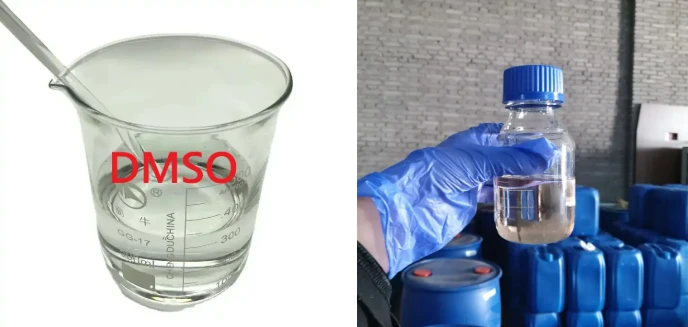
Is DMSO Polar Aprotic?
Yes. DMSO is a polar aprotic solvent. Its sulfur–oxygen (S=O) bond creates a strong molecular dipole, while the absence of O–H and N–H bonds means it cannot donate hydrogen bonds. This combination explains its high polarity and behavior in many chemical reactions.
For quick reference during process formulation and solvent selection, the baseline physical profile of DMSO is as follows:
| Physical Property | Typical Value |
|---|---|
| CAS Number | 67-68-5 |
| Molecular Formula | C₂H₆OS |
| Molecular Weight | 78.13 g/mol |
| Dielectric Constant (25°C) | Approx. 47 |
| Dipole Moment | Approx. 3.96 D |
| Boiling Point | Approx. 189°C |
| Melting Point | Approx. 18.5°C |
| Density (20°C) | Approx. 1.10 g/cm³ |
| Viscosity (25°C) | Approx. 2.0 mPa·s |
The melting point deserves particular attention in international trade. Unlike DMF and NMP, DMSO can solidify at temperatures commonly encountered in unheated warehouses during winter.
Why Is DMSO Aprotic Despite Being Highly Polar?
Polarity and proton donation describe different aspects of a solvent's molecular structure.
In DMSO, the oxygen atom attracts electron density from sulfur, creating a strongly polarized S=O bond. This allows the molecule to interact with positively charged ions and other polar substances.
Whether a solvent is protic or aprotic depends on its ability to donate hydrogen bonds. Water, methanol, and ethanol are polar protic solvents because they contain O–H bonds. DMSO contains neither O–H nor N–H groups, so it is classified as aprotic.
Its oxygen atom can still accept hydrogen bonds. Although DMSO has weakly acidic C–H bonds, this does not change its classification.
How Does DMSO Affect Chemical Reactions?
DMSO is commonly used in nucleophilic substitution reactions, particularly SN2 reactions. It solvates positively charged ions but does not stabilize anionic nucleophiles through hydrogen bonding as strongly as water or alcohols do.
For example, nucleophiles such as iodide and cyanide can show increased reactivity in DMSO compared with suitable polar protic reaction systems. Actual reaction rates depend on the substrate, concentration, temperature, and reaction conditions.
DMSO also participates directly in organic synthesis. In Swern oxidation, it helps convert primary alcohols into aldehydes and secondary alcohols into ketones.
Its high boiling point of approximately 189°C is useful in some high-temperature processes, but creates a separation challenge. Recovering DMSO from a product mixture generally requires more careful distillation than removing lower-boiling solvents such as acetone or ethyl acetate.
Manufacturers should account for this when estimating solvent consumption and operating costs.
DMSO vs DMF vs NMP: What Are the Differences?
DMSO, dimethylformamide (DMF), and N-methyl-2-pyrrolidone (NMP) are widely used polar aprotic solvents. Their different physical properties can influence production efficiency and solvent recovery.
| Property | DMSO | DMF | NMP |
|---|---|---|---|
| CAS Number | 67-68-5 | 68-12-2 | 872-50-4 |
| Molecular Weight | 78.13 | 73.09 | 99.13 |
| Boiling Point | 189°C | 153°C | 202°C |
| Melting Point | 18.5°C | -61°C | -24°C |
| Density (approx.) | 1.10 | 0.94 | 1.03 |
| Water Miscibility | Complete | Complete | Complete |
DMSO offers strong solvent power, but its melting point requires attention during cold-weather storage. DMF has a lower boiling point, which can simplify certain solvent-removal operations. NMP has a higher boiling point than DMSO and is used in specialized polymer and coating processes.
Regulations also influence purchasing decisions. DMF and NMP are subject to specific EU REACH restrictions. DMSO may be considered during solvent substitution, but it cannot replace either solvent automatically. Solubility, product quality, worker safety, and recovery performance must be tested before changing an established formulation.
Where Is DMSO Used in Industry?
DMSO serves different functions depending on the material being processed and the required solvent properties.
- Chemical synthesis: Used as a reaction medium in nucleophilic substitution and other organic reactions, as well as in oxidation chemistry.
- Polymer and fiber processing: Used to dissolve PAN in certain acrylic fiber spinning processes. Polymer concentration and solution viscosity need to be controlled for stable spinning.
- Resins and coatings: Used in formulations requiring strong solvency for particular organic compounds. Compatibility with the resin and other ingredients must be verified.
- Electronics manufacturing: Found in certain photoresist stripping and electronic cleaning formulations. Its suitability depends on the resist chemistry and substrate.
- Pharmaceutical and fine chemical production: Used as a reaction or processing solvent in applications where its solvency meets process requirements.
DMSO is not a universal replacement for other industrial solvents. Formulation testing remains necessary, particularly when changing the solvent in an established production line.

What Should Buyers Know About DMSO Storage and Handling?
DMSO has a melting point of approximately 18.5°C. During winter transportation, the material may crystallize or become solid if the temperature drops below this level. This does not necessarily indicate product deterioration.
For importers receiving DMSO in colder regions, warehouse temperatures and transit conditions should be considered before shipment. Appropriate temperature monitoring and controlled warming may be needed to restore the material to a liquid state.
Moisture is another quality concern. DMSO absorbs water from its surroundings, which can affect processes requiring anhydrous conditions. Keep containers sealed and check water content when receiving material for moisture-sensitive applications.
When evaluating DMSO supplied by Gnee Bio, buyers should pay particular attention to the water content reported on the batch-specific COA, especially if the solvent will be used in moisture-sensitive reactions. The actual specification should be matched to the production requirement rather than judged by purity alone.
DMSO can also increase the penetration of certain substances through human skin. Operators should avoid direct contact and follow the supplier's SDS for glove selection, protective clothing, and spill management.
Request the Latest DMSO COA and SDS
What Specifications Should Buyers Check Before Purchasing DMSO?
A purity figure of 99% or higher does not provide a complete picture of solvent quality. Water content, color, acidity, and trace impurities may also affect production results.
Before approving an industrial DMSO purchase, buyers should review the following specifications:
| Specification | Purchasing Purpose |
|---|---|
| Purity | Confirms the main component concentration |
| Water Content | Important for moisture-sensitive processes |
| Color | Helps assess appearance and possible impurities |
| Acidity / Alkalinity | Relevant to process compatibility |
| Density | Supports incoming quality control |
| Refractive Index | Provides an additional quality check |
Industrial-grade, anhydrous, pharmaceutical-grade, and electronic-grade DMSO have different quality requirements. The appropriate grade depends on the intended application and impurity limits.
For bulk orders, steel drums, IBC tanks, and ISO tanks are common packaging options. The choice depends on order volume, destination, storage facilities, and transportation arrangements.
When sourcing DMSO from Gnee Bio, buyers can request product specifications, a batch COA, SDS, and TDS for review before confirming an order. For a new application, requesting a sample and testing it against the existing production specification is a practical way to check compatibility before moving to bulk supply.
Frequently Asked Questions About DMSO
Is DMSO polar or nonpolar?
DMSO is highly polar because of the strong molecular dipole created by its S=O bond.
Can DMSO form hydrogen bonds?
Yes. Its oxygen atom accepts hydrogen bonds, but DMSO cannot donate them because it has no O–H or N–H groups.
Does DMSO freeze in winter?
Yes. Pure DMSO freezes at approximately 18.5°C and may solidify during cold-weather storage or transportation.
Can DMSO replace DMF or NMP?
It can be evaluated as an alternative in certain processes, but replacement requires testing of solubility, reaction performance, product quality, and recovery conditions.
Is DMSO miscible with water?
Yes. DMSO is completely miscible with water and is also compatible with many organic solvents.
Conclusion
DMSO's polar aprotic structure gives it strong solvent power and makes it useful in chemical synthesis, polymer processing, and specialty manufacturing. Its high boiling point, moisture absorption, and relatively high melting point should also be considered when planning production and bulk storage.
For industrial buyers, checking purity, water content, batch consistency, and transportation conditions is just as important as comparing solvent properties. Gnee Bio provides DMSO product information and purchasing support for buyers evaluating samples, specifications, and bulk supply requirements.
Get a Bulk DMSO Quote from Gnee Bio




