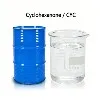

What Is Cyclohexanone (CYC) ?
Cyclohexanone (CAS 108-94-1) is an organic compound with the molecular formula C6H10O. It is a colorless, oily liquid with a slightly pungent odor, resembling that of acetone or peppermint, though less intense. This compound is a cyclic ketone with a six-carbon ring structure and a ketone functional group (a carbon double-bonded to oxygen) at one of its positions.

Cyclohexanone Properties
- Physical Properties: Cyclohexanone is a relatively volatile liquid at room temperature with a moderate boiling point. It is miscible with common organic solvents, such as alcohols, ketones, and ethers, but has limited solubility in water.
- Chemical Properties: The ketone group in cyclohexanone makes it a reactive compound capable of forming various chemical derivatives. It can undergo condensation reactions to form polymers and is a precursor to nylon through the production of adipic acid and hexamethylenediamine. Its reactivity also includes forming oximes and hydrazones upon reaction with hydroxylamine and hydrazine.
Industrial Applications of Cyclohexanone (CAS 108-94-1)
- Polymer Synthesis: Cyclohexanone (Cyc) serves as a precursor for nylon-6 and nylon-66, participating in polymerization reactions by converting into caprolactam and adipic acid.
- Pharmaceutical Formulation Development: Serves as a critical intermediate in antibiotic and hormone drug synthesis, contributing to the construction of drug molecular skeletons
- Agricultural Chemical Production: Cyclohexanone (Cyc) functions as a starting material for synthesizing pyrethroid insecticides and selective herbicides

How Cyclohexanone is Used in Nylon Production
As a Precursor to Caprolactam (Nylon 6)
Nylon 6, one of the most widely used synthetic polymers, is produced using caprolactam, which is derived from cyclohexanone through the oximation route:
Cyclohexanone → Oxime → Caprolactam → Nylon 6 polymer
- Caprolactam polymerizes to form long nylon chains
- cyclohexanone solvent purity directly affects polymer consistency
- Even slight impurities can reduce fiber strength and elasticity
This makes cyclohexanone (Cyc) quality control a crucial parameter in the final properties of Nylon 6 fibers.
In the Production of Adipic Acid (Nylon 66)
Nylon 66 is created from hexamethylene diamine and adipic acid, the latter often synthesized using cyclohexanone as a raw material. The process involves oxidation of cyclohexanone or cyclohexanol (or a mix known as KA oil).
Nylon 66 is more heat-resistant than Nylon 6, making it suitable for automotive and electrical parts. Cyclohexanone-based adipic acid ensures:
- High molecular weight polymers
- Better crystallinity
- Greater thermal stability
Gneebio: A Trusted Bulk Supplier & Distributor
As a leading manufacturer and exporter of fine chemicals, Henan Gneebio supplies Cyclohexanone (Cyc CAS 108-94-1) that meets both industrial- and laboratory-grade standards. We serve customers across the rubber, adhesives, and coatings industries, ensuring consistent quality, reliable logistics, and professional technical support.
Our Advantages:
- ISO9001 / ISO14001 / GMP certification available
- Own manufacturing facility with full hazardous chemical production permits
- Support for COA / MSDS / TDS / SGS testing
- Compliant with EU REACH requirements
- Stable exports to Southeast Asia, South America, Middle East, and Africa markets
- Single batch supply ≥20-200 MT, annual contracts supported