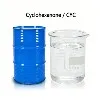

Acetic acid (GAA, CAS 64-19-7) serves as an industrial solvent in a wide range of applications, including solvents for paints and dyes, components in cleaning agents, and pharmaceutical production. Acetic acid is a common industrial organic compound with extensive industrial uses. As a solvent, acetic acid plays a vital role across multiple sectors, and this article explains how and where it is used.
What Is Acetic Acid (GAA)?
Acetic acid is a colorless, transparent liquid with a pungent, vinegar-like odor. Its chemical formula is CH3COOH and its molecular weight is 60.05 g/mol. The abbreviation GAA stands for glacial acetic acid, the concentrated form with a purity of 99.5% or higher. Acetic acid is miscible with water, ethanol, diethyl ether, glycerol and benzene, which makes it a highly versatile solvent. It is a weak acid that reacts with alkalis to form acetates and undergoes esterification with alcohols to produce esters.
Key Properties of Acetic Acid as a Solvent
| Property | Typical Value |
|---|---|
| Molecular formula | C2H4O2 (CH3COOH) |
| Appearance | Colorless transparent liquid |
| Density (20 °C) | About 1.049 g/cm3 |
| Boiling point | About 118 °C |
| Melting point | About 16.6 °C |
| Flash point (open cup) | About 57 °C |
| Miscibility | Miscible with water and most organic solvents |
| pH of 6% aqueous solution | About 2.4 |
Acetic Acid as a Reaction Medium
In chemical manufacturing and laboratory work, acetic acid is frequently employed as a reaction medium. Its excellent solubility and stability toward numerous chemicals provide an ideal environment for diverse chemical reactions. For example, in esterification reactions, acetic acid reacts with alcohols to form esters, serving both as a reactant and as the solvent in the same process. It is also used as a medium for oxidation, nitration and acylation reactions where many organic substrates dissolve readily in the acidic solvent phase.
Solvent for Coatings and Dyes
Acetic acid plays a vital role in paint and dye manufacturing. Its ability to dissolve various resins and pigments makes it widely used in the formulation of paints and dyes. By dissolving pigments or resins in acetic acid, manufacturers can produce uniform and stable paint or dye solutions, thereby enhancing product quality and performance. In textile dyeing, dilute acetic acid is used to adjust pH and fix dyes onto fibers, improving color fastness and levelness.
Component in Cleaning Agents and Pharmaceutical Production
Acetic acid is frequently used as a key ingredient in cleaning agents because of its potent cleaning and degreasing capabilities. In household and industrial cleaning products, acetic acid effectively dissolves grease, stains and other stubborn deposits. Additionally, it possesses antimicrobial properties that aid surface disinfection and inhibit microbial growth. In the pharmaceutical industry, acetic acid is used as a processing solvent in the synthesis and crystallization of active ingredients, and dilute solutions are used in pharmaceutical formulations as pH adjusters and buffering components.
Safety Considerations When Using Acetic Acid as a Solvent
Although acetic acid is a valuable solvent, concentrated GAA is corrosive and flammable and must be handled with care. It causes severe burns on skin and eye contact, and its vapors are irritating to the respiratory tract. Work areas should be well ventilated, and operators should wear chemical-resistant gloves, protective clothing and eye protection. Glacial acetic acid freezes at about 16.6 °C, so storage areas must be kept above this temperature in cold climates. It must be stored away from strong oxidizers and ignition sources, and spills should be contained and neutralized according to the safety data sheet before disposal as hazardous waste.
Frequently Asked Questions
Is acetic acid an industrial solvent? Yes. Acetic acid (GAA, CAS 64-19-7) is used as an industrial solvent in reactions, coatings, dyes, cleaning products and pharmaceutical processing because of its excellent solubility and versatility.
Why is acetic acid used as a reaction medium? It dissolves a wide range of organic compounds, is stable under many reaction conditions, and can participate directly in reactions such as esterification, making it an efficient medium.
Can acetic acid dissolve resins and pigments? Yes. Its solvent power enables the preparation of uniform paint and dye solutions, which improves product consistency and performance in coatings and printing applications.
Is acetic acid safe to use in cleaning products? In dilute household concentrations it is generally safe when used as directed, but concentrated acetic acid is corrosive and requires gloves, eye protection and good ventilation.
How should glacial acetic acid be stored? Store in compatible containers in a cool, dry, ventilated area above 16.6 °C, away from oxidizers and ignition sources, with spill containment equipment available.
What is the difference between glacial acetic acid and vinegar? Vinegar is a dilute aqueous solution containing about 3% to 9% acetic acid, while glacial acetic acid is the concentrated form with 99.5% or higher purity.