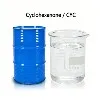

Chemical Properties of EGBE
Ethylene glycol monobutyl ether (EGBE, CAS 111-76-2) has the molecular formula C6H14O2. Its structure contains an ether bond and a hydroxyl group, endowing it with both ether characteristics and alcohol reactivity. It is colorless and transparent, exhibiting low toxicity and good volatility. Additionally, it exhibits excellent solvent properties, dissolving various resins, oils and dyes. The balance between the hydrophilic hydroxyl group and the hydrophobic butyl chain gives EGBE its unique position in the solvent range: it couples water and oil phases, which is the property that makes it valuable in coatings and cleaning formulations.
Use in the Paint Industry
Due to its strong solvent power and volatility, EGBE is commonly used as a solvent in paints. It helps regulate viscosity and drying speed, enhancing paint quality and application performance. In water-borne coatings, EGBE acts as a coalescing agent that helps the latex particles fuse into a continuous film as the water evaporates, and it improves the flow and leveling of the paint. In solvent-borne systems, it dissolves the resin and controls the evaporation profile of the blend, and it is also used as a thinner and cleaner for application equipment.
Use in Cleaning Agents
EGBE is also a key component in cleaning agents, effectively dissolving grease and grime to enhance cleaning efficacy. Its volatility ensures rapid drying without residue after use, which is essential for industrial cleaning where the surface must be ready for the next process step. In household and industrial cleaners, EGBE removes oil, wax and heavy soils that water-based detergents cannot handle, and it is a standard component of glass cleaners, degreasers and paint strippers.
Use in Chemical Synthesis
In chemical manufacturing, EGBE serves as a raw material for synthesizing other compounds, such as certain surfactants and plastic additives. Its hydroxyl group undergoes esterification and etherification, and its ether bond resists hydrolysis, making it a stable building block for the production of glycol ether esters, plasticizers and specialty surfactants. The derivatives inherit the coupling and solvency properties of the parent glycol ether, and they are used in coatings, inks and industrial fluids.
Handling and Safety
EGBE has low to moderate toxicity, but it is absorbed through the skin, so handling requires impervious gloves, goggles and adequate ventilation. The occupational exposure limits are defined by regulations, and the air concentration should be monitored in workplaces that use the solvent. Store EGBE in sealed containers away from oxidizers and ignition sources, and dispose of waste according to environmental regulations.
Frequently Asked Questions
What is EGBE used for? s a solvent in paints, a component of cleaning agents, and a raw material for surfactants and plastic additives.
What makes EGBE a good solvent? Its structure combines ether and alcohol characteristics, dissolving resins, oils and dyes, and coupling water and oil phases.
Why is EGBE used in water-borne paints? It acts as a coalescing agent that helps latex particles form a continuous film as water evaporates.
Is EGBE toxic? It has low to moderate toxicity and is absorbed through the skin, so protective gloves and ventilation are required.
What is the formula of EGBE? C6H14O2, with an ether bond and a hydroxyl group.