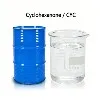

What Is Methylcyclohexane?
Methylcyclohexane is a saturated cyclic hydrocarbon belonging to the cycloalkane family. Its molecular formula is C7H14, and its structure consists of a six-membered cyclohexane ring substituted with a single methyl group. At room temperature it appears as a colorless, transparent liquid with a faint, characteristic hydrocarbon odor. It is essentially insoluble in water but dissolves readily in ethanol, ether, acetone, benzene, petroleum ether, carbon tetrachloride, and other common organic solvents.
Because of its low polarity and stable chemical behavior, methylcyclohexane does not react easily with acids, bases, or oxidizing agents under ordinary conditions. This chemical stability, combined with good solvency, makes it a practical choice for many non-polar dissolution tasks in both laboratory and industrial settings.
Alternative Names and Synonyms
The question of what another name for methylcyclohexane is has a straightforward answer: this compound is known under several systematic and commercial synonyms. The most common alternative names include:
Hexahydrotoluene
Cyclohexylmethane
Toluene hexahydride
MCH, the widely used abbreviation
1-Methylcyclohexane
Methylcyclohex
All of these terms refer to the same chemical substance with CAS registry number 108-87-2. When purchasing or specifying the material, buyers should verify the CAS number rather than relying on a trade name alone, because synonyms vary across regions and supplier catalogs.
Key Physical Properties
| Property | Typical Value |
|---|---|
| CAS number | 108-87-2 |
| Molecular formula | C7H14 |
| Appearance | Colorless transparent liquid |
| Boiling point | Approximately 100.9 °C |
| Melting point | Approximately -126.6 °C |
| Density at 20 °C | About 0.77 g/cm³ |
| Water solubility | Practically insoluble |
The numerical values above are typical reference data reported in standard chemical handbooks such as the CRC Handbook of Chemistry and Physics. Exact figures may vary slightly depending on the measurement method and purity grade of the sample.
Industrial and Laboratory Applications
Methylcyclohexane serves three principal roles in practice:
Solvent: it dissolves oils, waxes, resins, and other non-polar materials and is used in reaction, extraction, and washing processes where a water-immiscible medium is required.
Analytical standard: its consistent purity and well-defined boiling behavior make it suitable as a standard substance for chromatographic analysis and distillation calibration.
Calibration reference: because of its reproducible phase-transition behavior, it is used as a calibration standard for thermometers in the moderate temperature range.
In organic synthesis, methylcyclohexane can also serve as a starting material or reaction medium, although for most fine-chemical applications its solvent function dominates.
Safety and Handling Considerations
Methylcyclohexane is a flammable liquid and should be handled away from ignition sources. It can form explosive mixtures with air within a defined concentration range, so storage areas require adequate ventilation and proper grounding of containers. Prolonged skin contact may cause defatting of the skin, and inhalation of high vapor concentrations should be avoided. Appropriate personal protective equipment, including chemical-resistant gloves and safety goggles, is recommended when handling the material in bulk.
Disposal of methylcyclohexane waste must follow local environmental regulations, since the compound is a volatile organic compound and should not be released into drains or watercourses.
Frequently Asked Questions
What is another name for methylcyclohexane?
Common alternative names include hexahydrotoluene, cyclohexylmethane, toluene hexahydride, and 1-methylcyclohexane. The abbreviation MCH is also frequently used in industrial documentation.
Is methylcyclohexane the same as toluene?
No. Toluene (C7H8) is an aromatic hydrocarbon with a benzene ring, while methylcyclohexane (C7H14) is a saturated cycloalkane. The two compounds differ in structure, reactivity, and physical properties, even though hexahydrotoluene can be translated as hydrogenated toluene.
Is methylcyclohexane soluble in water?
No. Methylcyclohexane is practically insoluble in water because it is a non-polar hydrocarbon. It is, however, miscible with most organic solvents such as ethanol, ether, acetone, and petroleum ether.
What is the CAS number of methylcyclohexane?
The CAS registry number is 108-87-2. Buyers should always confirm the CAS number when sourcing the material, because similar-looking identifiers may refer to different compounds.
What are the main uses of methylcyclohexane?
It is mainly used as an organic solvent, a standard substance for chromatographic analysis, a calibration reference for thermometers, and a reaction medium in organic synthesis.
Is methylcyclohexane flammable?
Yes. Methylcyclohexane is a flammable liquid with a relatively low flash point. It must be stored away from heat, sparks, and open flames, and containers should be kept tightly sealed.