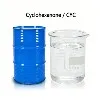

Acetic acid (GAA CAS 64-19-7) is one of the most important organic acids in chemical products. It has a wide range of applications, both industrial and in the food industry:
Industrial Grade Acetic Acid
- Glacial acetic acid is mainly used in the production of acetic anhydride, acetates, and cellulose acetate. Polyvinyl acetate can be used to make films and adhesives and is also a raw material for the synthetic fiber vinylon. Cellulose acetate can be used to manufacture rayon and film.
- Acetates formed from lower alcohols are excellent solvents, and acetic acid solutions are widely used in the paint industry. Because GAA can dissolve most organic substances, acetic acid is also a commonly used organic solvent (e.g., for the oxidation of p-xylene to produce terephthalic acid).
- Acetic acid (GAA) can be used in certain pickling and polishing solutions, as a buffer in weakly acidic solutions (such as zinc plating and electroless nickel plating), as an additive in semi-bright nickel plating electrolytes, and to improve the adhesion of passivation films in zinc and cadmium passivation solutions. It is also commonly used to adjust the pH of weakly acidic plating solutions.
- GAA is used in the production of acetates, such as salts of metals like manganese, sodium, lead, aluminum, zinc, and cobalt. It is widely used as a catalyst and an auxiliary agent in the textile dyeing and leather tanning industries. Lead acetate is used to produce lead white paint. Lead tetraacetate is a reagent in organic synthesis (e.g., it acts as a strong oxidizing agent, provides a source of acetoxy groups, and is used in the preparation of organolead compounds).
- GAA can also be used as an analytical reagent, in organic synthesis, and in the synthesis of pigments and pharmaceuticals.
Food Grade Acetic Acid
- In the food industry, GAA is used as an acidifier and flavor enhancer.
- As an acidulant, it can be used in compound seasonings, the preparation of vinegar, canned goods, jellies, and cheeses, used in appropriate amounts as needed for production. It can also be used as a flavor enhancer for koji-flavored liquor, with a dosage of 0.1–0.3 g/kg.
For detailed information on the chemical acetic acid (GAA CAS 64-19-7), please refer to:https://www.Gnee Bioical.com/petrochemicals/high-quality-99-5-acetic-acid-cas-64-19-7.html

acetic acid (GAA CAS 64-19-7) Specification
| Test ltem | Specification |
| Fusing point | 16.6 ºC |
| Boiling point | 117.9 ºC |
| Density | 1.05 g/cm3 |
| Flash point | 39 ° C (CC) |
| Refractive index | 1.371 (20 ° C) |
| Saturated vapor pressure | 1.52kPa (20ºC) |
| Critical temperature | 321.6 ºC |
| Critical pressure | 5.78 MPa |
| Ignition temperature | 426 ºC |
| Upper explosion limit (V/V) | 16.0% |
| Lower explosive limit (V/V) | 5.4% |
Packaging of acetic acid (GAA CAS 64-19-7)
| Packaging Type | Net Weight | Loading Quantity (20' FCL) |
|---|---|---|
| Plastic / Steel Drum | 30 kg | 720 drums |
| Plastic / Steel Drum | 220 kg | 80 drums |
| IBC Drum | 1,050 kg | 20 drums |
Why Choose Gneebio as Your Supplier?
As a leading manufacturer and exporter of fine chemicals, Henan Gneebio provides acetic acid (GAA CAS 64-19-7) that meets both industrial and laboratory-grade standards. We supply to customers across the chemical, pharmaceutical, and materials industries, ensuring consistent quality, reliable logistics, and professional technical support.
Our Advantages:
- ISO9001 / ISO14001 / GMP certification available
- Own manufacturing facility with full hazardous chemical production permits
- Support for COA / MSDS / TDS / SGS testing
- Compliant with EU REACH requirements
- Stable exports to Southeast Asia, South America, Middle East, and Africa markets
- Single batch supply ≥20-200 MT, annual contracts supported


Click here to get the latest acetic acid (GAA CAS 64-19-7) Supplier market prices for 2026.