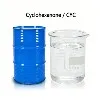

The Chemical Properties of Dimethyl Sulfoxide (DMSO, Chemical Formula (CH₃)₂SO)
Solvent Characteristics:
DMSO Liquid is a strong polar aprotic solvent with a high dielectric constant (ε≈47). It can dissolve most organic and inorganic substances, including salts, polymers, and biomolecules, making it widely used in chemical reactions and drug delivery applications.
Thermal Stability and Physical Properties:
Dimethyl Sulfoxide Liquid has a high boiling point of 189°C, low volatility, strong hygroscopicity, and excellent miscibility with water. Its good thermal stability makes it suitable for high-temperature reactions.
Chemical Reactivity:
Redox Behavior: The sulfur atom in DMSO Dimethyl Sulfoxide Liquid is in the +4 oxidation state and can be oxidized to dimethyl sulfone (DMSO₂) or reduced to sulfide. It also serves as a key reagent in Swern oxidation.
Coordination Ability: The lone pair of electrons on the oxygen atom allows DMSO Liquid to form coordination complexes with metal ions (such as Cu²⁺ and Fe³⁺), which are useful in catalytic systems.
Participation in Organic Reactions:
When used as a reaction medium, Dimethyl Sulfoxide Liquid enhances SN₂ reactions (such as Williamson ether synthesis) and elimination reactions. However, its potential nucleophilic behavior should be considered to avoid reaction interference.
Biocompatibility:
Due to its strong membrane penetration ability, DMSO Dimethyl Sulfoxide Liquid is often used as a drug carrier. However, high concentrations may cause skin irritation or toxicity.
Precautions:
DMSO Liquid is highly hygroscopic and should be stored in sealed containers. In laboratory settings, impurities or decomposition can lead to sulfurous odors. Its multifunctional nature makes it indispensable in synthetic chemistry, materials science, and biomedical research, but purity and concentration must be carefully controlled depending on the application.
Click here to get the latest global Dimethyl sulfoxide CAS 67-68-5 market prices for 2026.