
What Is Butanol and What Are Its Isomers?
Butanol is a saturated primary alcohol containing four carbon atoms, with the general molecular formula C4H9OH. Because the four carbon atoms can be arranged in different ways, butanol exists as four structural isomers: n-butanol (1-butanol), isobutanol (2-methyl-1-propanol), sec-butanol (2-butanol), and tert-butanol (2-methyl-2-propanol). All four share the same molecular formula but differ in the position of the hydroxyl group and the branching of the carbon chain, which gives each isomer a distinct set of physical properties such as boiling point, density, and water solubility.
In everyday industrial language, the unmodified term butanol usually refers to the straight-chain isomer, n-butanol, because it is the most widely produced and consumed member of the family. When precise identification is required, the CAS number and IUPAC name should always be used to avoid ambiguity, since the four isomers are handled differently in storage, safety, and application terms.
Is n-Butyl Alcohol the Same as Butanol?
Yes. n-Butyl alcohol is the straight-chain isomer of butanol, and the two terms are interchangeable when butanol is used in its default sense. The chemical name is butan-1-ol, with the hydroxyl group attached to the terminal carbon atom of a linear four-carbon chain. It is also called n-butanol or 1-butanol, and its CAS registry number is 71-36-3.
What is not interchangeable is the comparison between n-butyl alcohol and the other isomers. Isobutanol, sec-butanol, and tert-butanol are also butanols, but they are not n-butyl alcohol. For example, tert-butanol has a much higher melting point and forms crystalline solids near room temperature, while n-butanol remains a free-flowing liquid. Any purchasing or formulation decision must therefore confirm the exact isomer, not just the word butanol.
Physical and Chemical Properties of n-Butyl Alcohol
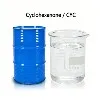
n-Butanol is a colorless, transparent liquid with a characteristic alcoholic odor. Its key physical constants are listed below.
| Property | Value |
|---|---|
| Molecular formula | C4H9OH (C4H10O) |
| Molecular weight | 74.12 g/mol |
| CAS number | 71-36-3 |
| Melting point | -89°C |
| Boiling point | 117.6°C |
| Flash point | 29°C (closed cup) |
| Density at 20°C | 0.81 g/cm³ |
| Refractive index at 20°C | 1.399 |
| Solubility in water | Sparingly soluble, about 7.7 g per 100 mL at 25°C |
Chemically, n-butanol is a primary alcohol. It undergoes the typical reactions of this class, including esterification with acids to form butyl esters, oxidation to butyraldehyde and butyric acid, and dehydration to butenes. Its moderate polarity allows it to dissolve many organic compounds while being only partially miscible with water, a combination that is useful in extraction and formulation work.
Industrial Applications of n-Butanol
n-Butanol is one of the most versatile C4 alcohols in industry. Its main applications include:
Solvent for paints, coatings, inks, adhesives, and varnishes, where it improves flow and gloss.
Raw material for plasticizers, especially butyl esters of phthalic, adipic, and phosphoric acids used in flexible PVC and rubber products.
Chemical intermediate for butyraldehyde, butyric acid, butylamine, and butyl acrylate.
Extractant and processing aid for fats, pharmaceuticals such as antibiotics and vitamins, and fragrance compounds.
Component of cleaning and degreasing formulations and an inert diluent in adhesive systems.
Biofuel candidate produced by fermentation, offering a higher energy density than ethanol.
In laboratory use, n-butanol serves as a reaction medium and as a mobile phase component in chromatography and extraction procedures where its limited water miscibility is an advantage.
How to Store and Handle n-Butyl Alcohol Safely
n-Butanol is classified as a flammable liquid with a flash point of about 29°C, so storage areas must be cool, dry, and well ventilated, away from open flames, sparks, and strong oxidizing agents. Containers should be kept tightly closed and grounded during transfer to prevent static discharge. The vapor is heavier than air and can travel to distant ignition sources, so ventilation at floor level is recommended.
For personal protection, use splash-proof goggles, nitrile or similar solvent-resistant gloves, and protective clothing when handling large quantities. Work in a fume hood or with local exhaust ventilation to control vapor exposure. In case of skin contact, wash thoroughly with soap and water; for eye contact, rinse with water for at least 15 minutes and seek medical attention. Spills should be absorbed with inert material and collected in sealed containers for disposal according to local regulations.
Frequently Asked Questions
Is n-butanol the same as 1-butanol?
Yes. n-Butanol, n-butyl alcohol, and 1-butanol are different names for the same straight-chain compound, butan-1-ol, with CAS number 71-36-3.
How many isomers of butanol exist?
Butanol has four structural isomers: n-butanol, isobutanol, sec-butanol, and tert-butanol. They share the formula C4H9OH but differ in structure and physical properties.
Why is the unmodified term butanol taken to mean n-butanol?
Because n-butanol is the straight-chain isomer and by far the most commercially important member of the family, industry convention uses butanol to mean n-butanol unless another isomer is specified.
What is n-butyl alcohol mainly used for?
It is used mainly as a solvent for coatings and inks, as a raw material for butyl plasticizers and butyl acrylate, and as an intermediate in the production of butyraldehyde, butyric acid, and butylamines.
Is n-butanol miscible with water?
No, it is only sparingly soluble in water, about 7.7 g per 100 mL at 25°C, while it dissolves readily in ethanol, diethyl ether, and most organic solvents.
What is the flash point of n-butanol and why does it matter?
The flash point is about 29°C, which places n-butanol in the flammable liquid category. This means storage and transfer must exclude ignition sources and follow flammable liquid handling codes.