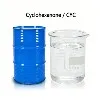

Ethyl acetate (CAS 141-78-6) and acetone (CAS 67-64-1) are both common industrial solvents, but they are not the same compound. Ethyl acetate is an ester with the formula C4H8O2, while acetone is a ketone with the formula C3H6O. Their different molecular structures produce meaningful differences in odor, evaporation rate, water solubility, flash point, and the types of coatings, adhesives, and cleaning tasks for which each is best suited. Understanding these differences helps formulators, maintenance teams, and buyers select the right solvent for a given application.
What Are Ethyl Acetate and Acetone?
Ethyl acetate, also called ethyl ethanoate or EA, is produced by esterification of ethanol with acetic acid. It is a colorless liquid with a mild, fruity odor and is widely used in coatings, inks, adhesives, and flavorings. Acetone, also called propanone or dimethyl ketone, is the simplest saturated ketone and is typically produced by the cumene process or by dehydrogenation of isopropanol. It is a colorless liquid with a sharp, characteristic odor and is used across cleaning, coatings, and chemical synthesis. Both solvents are fast-drying, but they differ in several properties that matter in practice.
Key Differences at a Glance
| Property | Ethyl Acetate | Acetone |
|---|---|---|
| CAS number | 141-78-6 | 67-64-1 |
| Chemical formula | C4H8O2 | C3H6O |
| Chemical class | Ester | Ketone |
| Molecular weight | 88.11 | 58.08 |
| Odor | Mild, fruity | Strong, sharp |
| Boiling point | About 77 °C | About 56 °C |
| Evaporation rate | Fast | Very fast |
| Water solubility | Partially miscible | Completely miscible |
| Flash point (closed cup) | About -4 °C | About -20 °C |
Applications of Ethyl Acetate
Ethyl acetate is valued for its mild odor and good solvency for nitrocellulose, acrylic, and vinyl resins. It is a standard solvent in flexographic and gravure printing inks, varnishes, and enamel paints, and it is used in adhesives for packaging and lamination. In the food industry, ethyl acetate appears as a flavor carrier and extraction solvent for fruit and cream aromas, and it contributes to the aroma profile of distilled spirits. It also serves as a carrier solvent in some agrochemical formulations and as an extraction solvent in pharmaceutical processing.
Applications of Acetone
Acetone is a versatile raw material and cleaning solvent. It is used to produce epoxy resins, polycarbonates, acrylic glass, and methyl methacrylate, and it is a precursor for acetic anhydride, chloroform, and other derivatives. As a solvent, acetone cleans flux residues from circuit boards, degreases metal parts, dilutes coatings and adhesives, and removes residues from equipment. Its complete miscibility with water makes it useful in rinse sequences, and it is widely used as an extractant and as a carrier in acetylene cylinders.
How to Choose Between Ethyl Acetate and Acetone
Odor sensitivity: choose ethyl acetate where a mild, fruity odor is preferable, such as printing shops and food-adjacent facilities.
Evaporation speed: choose acetone when the fastest possible drying is required; choose ethyl acetate when a slightly longer open time improves flow and leveling.
Polymer compatibility: ethyl acetate is generally gentler on many plastics; acetone attacks polystyrene, ABS, polycarbonate, and acrylic.
Water washability: acetone is fully water-miscible, which simplifies water rinse sequences; ethyl acetate is only partially miscible.
Flammability control: acetone has a lower flash point, so additional fire-safety precautions apply wherever it is stored or used.
Regulatory and food contact: ethyl acetate is widely permitted as a food-grade solvent; verify specific regulations for the intended use.
Frequently Asked Questions
Is ethyl acetate the same as acetone?
No. Ethyl acetate is an ester (C4H8O2) with a fruity odor, while acetone is a ketone (C3H6O) with a sharp odor. They differ in boiling point, water solubility, flash point, and application profile.
Which evaporates faster, ethyl acetate or acetone?
Acetone evaporates faster. Its boiling point is about 56 °C, compared with about 77 °C for ethyl acetate, so acetone dries more quickly and leaves less open time for coating flow.
Can ethyl acetate be used in place of acetone?
Sometimes, but not always. Ethyl acetate can replace acetone in some coating and ink applications where a slower evaporation rate and milder odor are acceptable. It cannot match acetone for water-miscible rinse systems, and solubility results should always be verified with the specific polymer system.
Which solvent is safer to handle?
Both are highly flammable and require ventilation and ignition control. Acetone has a lower flash point (about -20 °C) and higher vapor pressure, so it demands stricter fire-safety and vapor-control measures.
Is ethyl acetate soluble in water?
Ethyl acetate is only partially miscible with water, dissolving to about 8 percent at room temperature, while acetone is completely miscible in all proportions.
Why is acetone often used to clean circuit boards?
Acetone quickly dissolves rosin flux residues and evaporates without leaving residue, which helps maintain insulation and solder joint reliability. Compatibility with board materials and components must be confirmed first.