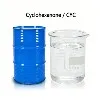

The boiling point of glacial acetic acid is 118.1°C (244.6°F) at standard atmospheric pressure (1 atm), making it a relatively high-boiling organic acid widely used in industrial chemical processes.
Glacial Acetic Acid Has a Well-Defined Physical Boiling Point
Glacial acetic acid is nearly pure acetic acid (CH₃COOH) with a concentration of 99%–99.8% and water content below 1%. Because of its high purity, it exhibits stable and well-defined physical properties, including a boiling point of approximately 118.1°C.
This relatively high boiling point is attributed to strong intermolecular hydrogen bonding, where acetic acid molecules form stable cyclic dimers in the liquid phase.
Boiling Point Is a Critical Property in Industrial Applications
The boiling point of glacial acetic acid directly affects its use in chemical manufacturing, separation processes, and laboratory operations.
It is widely used in processes such as:
- Chemical distillation and reflux reactions
- Production of acetate esters
- Manufacturing of acetic anhydride
- Pharmaceutical intermediate synthesis
Because it does not evaporate easily at room temperature, it is suitable for controlled high-temperature reactions.

Physical Properties of Glacial Acetic Acid
Glacial acetic acid has distinct thermal properties that distinguish it from diluted acetic acid solutions.
Key properties include:
- Boiling point: 118.1°C
- Freezing point: 16.6°C
- Appearance: colorless liquid or crystalline solid below freezing point
- Strong pungent odor
- Highly corrosive in concentrated form
Its freezing behavior is the reason it is called "glacial," as it can form ice-like crystals under mild cooling conditions.
Boiling Point vs Freezing Point Behavior
Glacial acetic acid has both a relatively high boiling point and a relatively high freezing point, which creates unique handling characteristics.
- At temperatures below 16.6°C, it solidifies into a crystal-like form.
- At temperatures above 118.1°C, it transitions into vapor.
This dual-phase behavior is important in storage, transport, and industrial processing.
Safety Implications of Its Boiling Point
The boiling point of glacial acetic acid also relates to its safety profile in industrial environments.
When heated near its boiling point, it can release irritating vapors that require proper ventilation and protective equipment.
Common safety measures include:
- Use of chemical-resistant gloves and goggles
- Proper ventilation or fume hoods
- Avoiding open flames due to flammability risk
- Controlled heating during industrial processing
Glacial Acetic Acid vs Water Boiling Point (Simple Comparison)
To understand its thermal behavior:
- Water boils at 100°C
- Glacial acetic acid boils at 118.1°C
This higher boiling point indicates stronger intermolecular bonding compared to water, making it less volatile under standard conditions.
Conclusion
The boiling point of glacial acetic acid is 118.1°C (244.6°F), a key physical property that defines its behavior in industrial chemistry. Its relatively high boiling point, combined with strong hydrogen bonding and high purity, makes it an essential chemical in synthesis, manufacturing, and laboratory applications.
Frequently Asked Questions of Glacial Acetic Acid (CH₃COOH)
What is the boiling point of glacial acetic acid?
The boiling point of glacial acetic acid is 118.1°C (244.6°F) at standard atmospheric pressure (1 atm).
Why does glacial acetic acid have a high boiling point?
Glacial acetic acid has a high boiling point due to strong hydrogen bonding and dimer formation between molecules, which increases intermolecular attraction.
Is glacial acetic acid more volatile than water?
No. Glacial acetic acid is less volatile than water, as it has a higher boiling point (118.1°C vs 100°C).
What happens when glacial acetic acid is heated?
When heated near its boiling point, it produces corrosive vapors that require ventilation and protective equipment.
What is the freezing point of glacial acetic acid?
The freezing point is approximately 16.6°C (61.9°F), where it forms ice-like crystals.