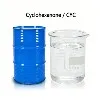

Cyclohexanone (CAS 108-94-1) is a high-boiling cyclic ketone solvent used in polymer systems where both strong resin solvency and controlled evaporation are required. It is commonly applied in PVC, acrylic, CAB, and nitrocellulose-based formulations because it can dissolve polar thermoplastic resins while maintaining stable drying behavior during film formation. Compared with fast-evaporating solvents such as MEK or acetone, cyclohexanone provides longer open time, improved leveling, and reduced coating defects, making it widely used in industrial coatings, adhesives, inks, and synthetic leather production.

Why Is Cyclohexanone Used in Polymer Manufacturing?
Cyclohexanone is widely used in polymer manufacturing because it provides a balanced combination of solvency strength and process stability in polymer processing systems.
In industrial applications, its value comes from four functional properties:
1. Strong resin solvency
Cyclohexanone interacts effectively with polar polymer chains, allowing dissolution of high molecular weight resins such as PVC, acrylics, and CAB systems that are difficult to process with low-polarity solvents.
2. Controlled evaporation rate
As a high boiling ketone solvent (155.6°C), it evaporates gradually during processing. This prevents premature skin formation and allows sufficient time for polymer chain alignment and film leveling.
3. Stable polymer processing window
In coating and adhesive systems, the extended evaporation profile improves viscosity stability and reduces formulation sensitivity during industrial production.
4. Improved film formation behavior
Because evaporation is gradual, polymer chains have time to reorganize, resulting in smoother films with fewer surface defects such as pinholes or orange peel.
What Polymers Does Cyclohexanone Dissolve?
Cyclohexanone shows selective but industrially important compatibility across thermoplastic polymers:
| Polymer | Solubility |
|---|---|
| PVC | Excellent |
| Acrylic | Excellent |
| CAB | Excellent |
| Nitrocellulose | Good |
| Polyurethane | Partial |
| Polycarbonate | Limited |
| Polyolefins (PE/PP) | Not compatible |
In polymer processing, cyclohexanone is typically used either as a primary solvent for PVC and acrylic systems or as part of a blended solvent system to adjust evaporation rate and viscosity.
Which Resins Are Compatible with Cyclohexanone?
Cyclohexanone is widely used as a resin solvent in thermoplastic and semi-polar resin systems.
It is especially compatible with:
- Acrylic resin (thermoplastic systems)
- Vinyl resin and PVC resin systems
- CAB (cellulose acetate butyrate)
- Nitrocellulose formulations
- Epoxy resin (limited, co-solvent only)
- Polyester systems (application-dependent)
In industrial formulation practice, compatibility is not only determined by dissolution ability but also by film clarity, adhesion performance, and drying balance in final applications.
Industrial Applications of Cyclohexanone in Polymer Products
Adhesives (PVC adhesive systems)
Cyclohexanone is widely used as an adhesive solvent in PVC-based systems because it enables solvent welding rather than simple surface bonding. It temporarily softens and swells the PVC structure, allowing polymer chains to interdiffuse before re-solidification during solvent evaporation.
Typical applications include PVC pipe cement, shoe adhesives, and industrial laminating systems.
Coatings
In industrial coatings, cyclohexanone is used in systems where controlled film formation is required, especially in:
- Metal primers
- Coil coatings
- High-gloss wood coatings
Its slow evaporation allows sufficient time for flow and leveling, which helps reduce surface defects in high-solids coating systems.

Printing Inks
In gravure ink and flexographic ink formulations, cyclohexanone is used as a printing ink solvent for plastic film substrates. It improves ink transfer stability, enhances adhesion to PVC and PU films, and helps control drying behavior in high-speed printing environments.

Plastic Manufacturing
In polymer processing and plastic manufacturing, cyclohexanone is used as a processing solvent and formulation medium for thermoplastic resin systems. It is also used in cleaning and resin dissolution processes where controlled solvency is required.

Synthetic Leather (PU leather / artificial leather)
Cyclohexanone plays a key role in PU leather production, where it is used to dissolve polyurethane resins into a stable coating solution. It helps control coating viscosity, ensures uniform film formation, and supports consistent surface texture during drying on release paper systems.

Polymer Film & Membrane Coating
In solution casting and membrane production, cyclohexanone is used to control phase separation behavior during drying. This directly influences pore structure, permeability, and final mechanical properties of polymer films.

Why Is Cyclohexanone Widely Used in PVC Processing?
Cyclohexanone is widely used in PVC systems because its solubility characteristics closely match PVC polymer behavior, allowing effective interaction with polymer chains.
It is commonly applied in:
- PVC cement and solvent welding systems
- PVC adhesive formulations
- PVC coating systems
- PVC sheet and film processing
- PVC compound processing aids
In practical processing, it supports:
- Strong interfacial bonding
- Stable viscosity during application
- Reduced internal stress during film formation
Cyclohexanone vs Other Polymer Solvents
| Solvent | Boiling Point | Evaporation | PVC Solvency | Industrial Use |
|---|---|---|---|---|
| Cyclohexanone | 155.6°C | Slow | Excellent | Coatings, adhesives |
| MEK | 79.6°C | Fast | Good | Fast-dry systems |
| Acetone | 56.1°C | Very fast | Moderate | Cleaning, thinning |
| Ethyl acetate | 77.1°C | Fast | Low | Ink systems |
| THF | 66°C | Fast | Excellent |
Specialty PVC systems |
In industrial formulation design, cyclohexanone is selected when coating quality and process stability are more important than drying speed.
Advantages of Cyclohexanone in Polymer Processing
Cyclohexanone is widely used in polymer systems because it provides:
- Strong solvency for polar thermoplastic resins
- Controlled evaporation suitable for industrial coating lines
- Excellent film formation performance
- Compatibility with common co-solvent systems
- Stable batch performance in large-scale production
Technical Specifications Buyers Should Know
Industrial grade cyclohexanone (CAS 108-94-1) is typically evaluated based on:
- Molecular Formula: C₆H₁₀O
- Appearance: Colorless, volatile liquid with a distinctive earthy odor.
- Boiling Point: Approximately 155.6°C (312.1°F)
- Density: Around 0.948 g/cm³ at 20°C
- Solubility: Slightly soluble in water and miscible with most organic solvents.
- Chemical Stability: Stable under normal conditions but can react with strong oxidizing agents.
- Flash point :111° F to 114.8° F (44° C to 46° C)
In procurement practice, these parameters are used to ensure consistency in coatings, adhesives, and polymer processing applications. Discover Gneebio's Premium Cyclohexanone Products
FAQs
Is cyclohexanone a good solvent for polymers?
Yes. It is widely used in polymer systems such as PVC, acrylic, CAB, and nitrocellulose due to its balanced solvency and controlled evaporation behavior.
What polymers does cyclohexanone dissolve?
It dissolves PVC, acrylic resin, CAB, and nitrocellulose effectively, while showing partial compatibility with polyurethane and epoxy systems.
Which resins are compatible with cyclohexanone?
Compatible resins include acrylic resin, PVC resin, vinyl resin, CAB, and nitrocellulose, depending on formulation and processing conditions.
Why is cyclohexanone used in PVC adhesives?
Because it enables solvent welding by temporarily softening PVC surfaces and allowing molecular interdiffusion before solidification.
Can cyclohexanone replace MEK?
In many coating and adhesive systems, yes. It provides longer open time and better film formation, while MEK is preferred for fast drying applications.
Is cyclohexanone used in coatings?
Yes. It is widely used in industrial coating systems such as coil coatings, primers, and wood lacquers where controlled evaporation is required.