Acetone vs Xylene Paint Thinner: Quick Answer
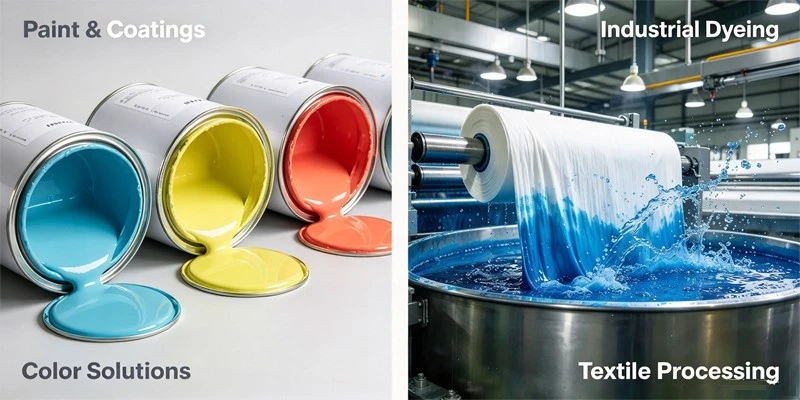
Xylene is generally better for solvent-based coatings that require controlled evaporation and good leveling, while acetone is preferred for fast-drying coatings and compatible polar resins. Xylene is commonly used in alkyd, epoxy and certain polyurethane formulations. Acetone is widely used in nitrocellulose lacquers, thermoplastic acrylic coatings and cleaning applications.
When comparing acetone vs xylene paint thinner, the right choice depends on resin compatibility, drying requirements and application conditions.
Key Properties of Acetone and Xylene
The main differences between these industrial paint thinner solvents are polarity, evaporation rate and resin solvency.
| Property | Acetone | Mixed Xylene |
|---|---|---|
| CAS Number | 67-64-1 | 1330-20-7 |
| Chemical Type | Polar ketone | Aromatic hydrocarbon |
| Boiling Point | 56.1°C | Approx. 137–144°C |
| Flash Point | Approx. −20°C | Approx. 25–30°C |
| Evaporation Rate (n-butyl acetate = 1) | Approx. 5.6 | Approx. 0.7–0.8 |
| Water Solubility | Completely miscible | Slightly soluble |
| Polarity | Polar aprotic | Low polarity |
| Typical Purity | 99.5–99.9% | Grade-dependent |
| UN Number | UN 1090 | UN 1307 |
| Transport Class | Class 3 | Class 3 |
Values are typical references. Mixed xylene properties vary with isomer composition. Evaporation rates depend on test conditions.
Technical references: PubChem, NIOSH Pocket Guide and supplier SDS/TDS documentation.
For detailed purity, moisture content, and packaging information, view our industrial-grade mixed xylene specifications.
How Acetone and Xylene Affect Coating Performance
Resin Compatibility
Acetone is a strong solvent for many polar resins, including certain nitrocellulose, vinyl and thermoplastic acrylic grades. Its polar structure helps dissolve compatible polymers and reduce coating viscosity.
Xylene is commonly used with alkyd, chlorinated rubber, hydrocarbon-based and selected epoxy resins. Its aromatic structure provides effective solvency for compatible coating binders.
For effective solvent selection for paint formulation, manufacturers should check resin compatibility, required viscosity and the resin supplier's recommended solvent list.
Xylene vs Acetone Evaporation Rate
Acetone evaporates considerably faster than xylene, making it suitable for coatings requiring rapid initial drying. However, excessive evaporation may cause dry spray, orange peel, poor leveling or blushing under humid conditions.
Xylene evaporates more slowly, allowing additional time for coating flow and film formation. This can improve surface leveling, although excessive solvent retention may extend drying time.
The xylene vs acetone evaporation rate difference is especially important in spray coatings, where solvent release affects surface finish and application efficiency.
Which Solvent Is Better for Different Paint Systems?
| Coating System | Preferred Solvent | Key Consideration |
|---|---|---|
| Alkyd / Oil-Based Paint | Xylene | Solvency and leveling |
| Epoxy Coatings | Often Xylene | Hardener compatibility |
| Two-Component Polyurethane | Often Xylene | Moisture control |
| Nitrocellulose Lacquer | Acetone | Fast drying and resin solvency |
| Thermoplastic Acrylic | Both, grade-dependent | Resin compatibility |
| Chlorinated Rubber | Often Xylene | Aromatic solvency |
| Bituminous Coatings | Often Xylene | Hydrocarbon compatibility |
For alkyd, epoxy, and other compatible solvent-based coatings, explore our mixed xylene grades for paints and coatings.
Acetone vs Xylene for Epoxy Coatings
Xylene is commonly used in solvent-based epoxy formulations, often blended with alcohols or other compatible solvents.
Acetone requires additional testing in amine-cured epoxy systems because ketones can react with certain primary amines to form imines under suitable conditions. This may affect curing-agent availability and coating performance.
When comparing acetone vs xylene for epoxy, manufacturers should evaluate resin solubility, pot life and curing behavior before production.
Polyurethane Coatings
Xylene is used in compatible polyurethane formulations where controlled evaporation is required.
Moisture is a critical consideration in two-component polyurethane systems. Water reacts with isocyanate groups, potentially releasing carbon dioxide and causing bubbles or pinholes.
Acetone is water-miscible, so moisture contamination during handling requires attention. Both solvents must meet the coating manufacturer's purity and water-content requirements.
Nitrocellulose and Acrylic Coatings
An acetone solvent for coatings is particularly useful in fast-drying nitrocellulose lacquers and compatible thermoplastic acrylic formulations.
Its rapid evaporation supports short drying times but may reduce leveling performance. Xylene or other slower solvents can be incorporated into compatible formulations to control solvent release.
The finished blend should be tested for resin clarity, viscosity and coating appearance.
Can Acetone and Xylene Be Mixed in Paint?
Yes, acetone and xylene are generally miscible, but their mixture must be compatible with the coating resin.
Industrial coatings often use multiple solvents to balance solvency and evaporation.
Acetone provides rapid initial solvent release, while xylene can extend drying and leveling time. Esters such as ethyl acetate or butyl acetate may also be used to adjust the evaporation profile.
Before using a mixed solvent system, test resin stability, viscosity, drying time and finished-film appearance. The mixture's flash point must also be evaluated.
Evaluating solvent compatibility for a coating formulation? Request acetone or xylene samples for laboratory testing.
Safety and VOC Regulations
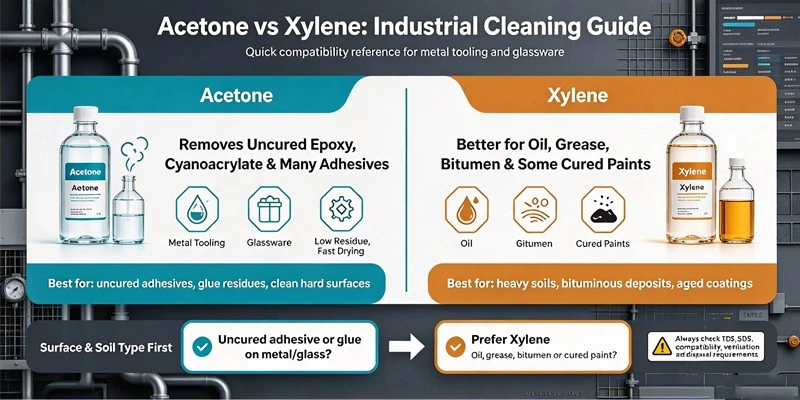
Both acetone and xylene are flammable liquids requiring suitable ventilation, ignition-source control and safe storage.
Acetone has a much lower flash point and evaporates rapidly. Xylene also produces flammable vapors and can cause harmful exposure in poorly ventilated workplaces.
Under applicable U.S. EPA definitions, acetone is VOC-exempt for ozone-control purposes, while xylene is generally VOC-regulated and listed as a hazardous air pollutant.
VOC requirements vary by country and coating category. Manufacturers should verify local regulations and current SDS information before selecting either solvent.
Cost and Bulk Solvent Purchasing
The cost of acetone vs xylene paint thinner should be evaluated by coating performance, not simply price per kilogram.
Acetone pricing is influenced by phenol production through the cumene process, while xylene prices are closely connected to petroleum refining and aromatic hydrocarbon markets.
Buyers sourcing bulk acetone or bulk xylene should consider solvent consumption, evaporation losses, drying requirements and delivered costs.
For international orders, request quotations specifying quantity, packaging, delivery destination and Incoterms.
What Specifications Should Buyers Request?
Selecting a reliable solvent supplier requires consistent product specifications and batch documentation.
| Purchasing Parameter | Acetone | Mixed Xylene |
|---|---|---|
| Purity | Required assay | Grade and composition |
| Water Content | Maximum limit | Maximum limit |
| Color | APHA | APHA |
| Additional Tests | Acidity, residue, distillation | Isomer ratio, ethylbenzene, distillation |
| Documents | COA, TDS, SDS | COA, TDS, SDS |
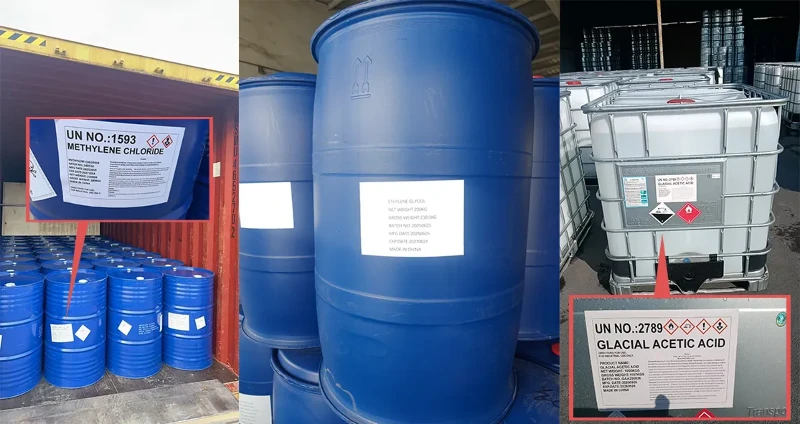
| Packaging | Drums, IBC, bulk | Drums, IBC, ISO tanks |
For acetone used in industrial coatings, water content, purity and evaporation residue are important purchasing parameters.
When choosing a xylene paint solvent supplier, buyers should confirm isomer composition, ethylbenzene content, distillation range and batch consistency.
Before approving a new supplier, request a representative sample and verify performance in the intended coating formulation.
Frequently Asked Questions
Can acetone replace xylene in epoxy paint?
Not in every formulation. Acetone may dissolve certain epoxy resins, but its compatibility with amine curing agents must be tested.
Which solvent dries faster, acetone or xylene?
Acetone evaporates considerably faster than xylene. It is generally better for rapid initial drying, while xylene provides longer leveling time.
Is acetone better than xylene for paint thinning?
Neither is universally better. Acetone suits compatible fast-drying systems, while xylene is often preferred for aromatic-soluble resins requiring controlled film formation.
What should I check when buying industrial xylene?
Check isomer composition, ethylbenzene content, water content, distillation range, packaging and batch COA.
Conclusion
Choosing between acetone and xylene paint thinner depends on resin compatibility, evaporation rate and coating performance. Acetone is useful for fast-drying formulations, while xylene is commonly selected for solvent-based coatings requiring controlled film formation.
Tianjin Gnee Biotech Co., Ltd. supplies industrial-grade acetone (CAS 67-64-1) and mixed xylene (CAS 1330-20-7) for coatings, inks, adhesives and other industrial applications.
Request a Quote, COA or Sample - Contact our team for product specifications, packaging options and bulk solvent pricing.