
Ethyl Acetate (EtOAc), CAS 141-78-6, is a widely used organic solvent in industries such as coatings, paints, adhesives, pharmaceuticals, printing inks, and flavor extraction. Among its physical properties, density is one of the most important technical indicators, as it directly influences formulation design, process control, and end-product performance.
Understanding the density of Ethyl Acetate solvent helps chemical engineers, formulators, and procurement teams optimize usage in both laboratory and large-scale industrial production.
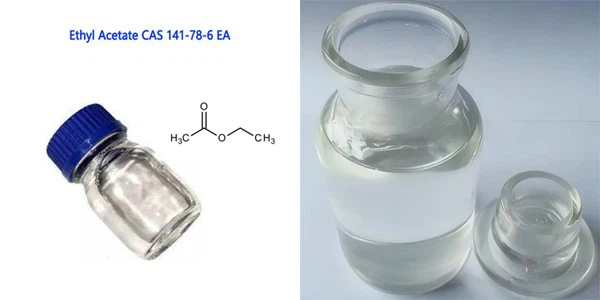
ethyl acetate standard density
The density of ethyl acetate refers to the mass per unit volume of ethyl acetate at a certain temperature and pressure. Typically, the density of ethyl acetate is expressed in grams per cubic centimetre (g/cm³) or kilograms per cubic metre (kg/m³). Based on data from standard conditions, the density of ethyl acetate is approximately 0.897 g/cm³. This means that the mass of 1 cubic centimetre of ethyl acetate is approximately 0.897 grams at room temperature and pressure.
Factors Affecting Ethyl Acetate Density
Temperature Influence
Temperature is the most significant factor affecting Ethyl Ethanoate density.
When temperature increases:
- Molecular spacing expands
- Liquid volume increases
- Density decreases
Therefore, industrial production usually maintains controlled temperature conditions to ensure consistent solvent performance.
Purity Level
The purity of Ethyl Acetate solvent (CAS 141-78-6) directly impacts density values.
Impurities such as water, alcohols, or other esters can:
- Shift density away from standard values
- Affect evaporation rate
- Reduce solvent stability in formulations
High-purity Ethyl Acetate ensures reliable performance in industrial applications.
Pressure Conditions
Although liquids are less sensitive to pressure compared to gases, high-pressure environments can slightly increase Ethyl Acetate density due to molecular compression. This is mainly relevant in specialized chemical processing systems.
Molecular Structure and Physical Properties of Ethyl Acetate
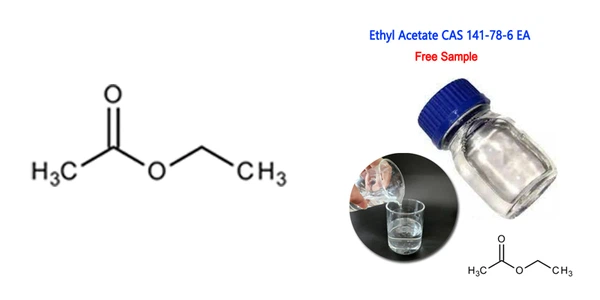
Molecular formula for ethyl acetate is C4H8O2. Its structure contains an ester functional group, where acetic acid bonds with ethanol. A simple but efficient design allows rapid evaporation, a trait valued in fast-drying coatings and inks. Its specifications typically list its appearance as a clear, colorless liquid, but refrigeration can bring about solidification, which appears as colorless crystals.
Download COA / MSDS
Ethyl acetate properties
Physical properties define much of ethyl acetate's functional value. Density stands at about 0.90 g/cm3 at 20°C. Boiling point hovers around 77°C, an attribute that gives it the edge in quick-drying solvent applications. Viscosity sits low, making it easy to pour, blend, and remove, even on messy shop benches. Its solubility marks a critical attribute; it mixes with many organic liquids but resists full dissolution in water.
Chemical Formula and Raw Material Input of Ethyl Acetate
Producing ethyl acetate draws on two readily available raw materials: ethanol and acetic acid. Industrial synthesis typically relies on the Fischer esterification reaction, where concentrated sulfuric acid acts as a catalyst. At Tianjin Gnee Biotech Co., Ltd., ton-scale production is carried out under strictly controlled conditions, including precise temperature, pressure, and feedstock ratios, to minimize by-products and ensure stable product quality.
The company operates with a strong focus on process consistency and quality assurance. Regular audits, in-process testing, and final inspection are implemented throughout production to ensure that every batch of ethyl acetate meets the required specifications for downstream industries such as coatings, paints, inks, and adhesives.
Ethyl acetate applications
Ethyl acetate finds a role in producing adhesives, coatings, inks, extracts, and laboratory solutions, making it a key example when discussing uses of ethyl acetate across multiple sectors. Widely recognized in ethyl acetate in industries, it is valued as a versatile ethyl acetate solvent thanks to its ability to dissolve a broad range of synthetic and natural resins.
In research and pilot production environments, ethyl acetate applications in laboratories are especially prominent, where it serves as a reliable solvent for formulation, testing, and extraction processes. In the aroma and flavor industries, it efficiently pulls compounds from botanicals with minimal residue. Nail polish removers also rely on this ester for their fast-drying performance and characteristic scent.
📩 Request Bulk Pricing & Technical Documents from Gneebio today.

Why Choose Gneebio as Your Supplier?
As a leading manufacturer and exporter of fine chemicals, Tianjin Gnee Biotech Co., Ltd. provides high-purity Ethyl Acetate cas 141-78-6 that meets both industrial and laboratory-grade standards. We supply to customers across the chemical, pharmaceutical, and materials industries, ensuring consistent quality, reliable logistics, and professional technical support.
Our Advantages:
- We run advanced ISO9001, ISO14001, and GMP-certified production lines.
- Our products reach over 60 countries with long-term partners in Asia, Africa, and Latin America.
- Ample inventory ensures fast, reliable bulk delivery.
- Gneebio provides personalized technical and business support from inquiry to after-sales.