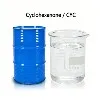

Mono Ethylene Glycol (MEG, also known as ethylene glycol, 1,2-ethanediol) is a globally standardized industrial chemical (CAS 107-21-1, C₂H₆O₂) widely used in PET production, antifreeze systems, and chemical intermediates. In industrial procurement, MEG quality is primarily defined by purity ≥99.5–99.9%, water ≤0.05%, and DEG ≤0.10%, which directly determines downstream polymer quality and processing stability.
Basic Chemical Information of MEG
MEG is a standardized diol chemical (C₂H₆O₂, MW 62.07 g/mol) with global industrial identification under CAS 107-21-1, and its molecular structure with two hydroxyl groups directly determines its high reactivity and PET polymer suitability.
- Chemical Formula: C₂H₆O₂ (structural formula: HOCH₂CH₂OH or (CH₂OH)₂)
- Molecular Weight: 62.07 g/mol
- CAS Number: 107-21-1
- EINECS Number: 203-473-3
- HS Code: 2905310000
- Molecular Structure: Linear diol structure with two hydroxyl (-OH) groups, enabling strong hydrogen bonding, hydrophilicity, and polymer reactivity.

Physical and Chemical Specifications (Industrial / Fiber Grade)
MEG is commercially classified into fiber grade (≥99.9%) and industrial grade (≥99.5%), and in PET manufacturing, purity below 99.8% can increase DEG-related polymer defects by 10–15%, making specification control critical for procurement decisions.
| Parameter | Fiber Grade (Premium) | Industrial Grade | Test Standard |
|---|---|---|---|
| Appearance | Colorless, transparent, no impurities | Slightly yellow transparent liquid | Visual |
| Purity (MEG) | ≥99.90 wt% | ≥99.50 wt% | GC (ASTM D5501) |
| Density (20°C) | 1.1131–1.1136 g/cm³ | 1.1130–1.1150 g/cm³ | ASTM D4052 |
| Melting Point | -12.9°C | -12.9°C | ASTM D1078 |
| Boiling Point | 197.3–197.6°C | 197–198°C | ASTM D1078 |
| Flash Point | 111°C | 110°C | ASTM D93 |
| Color (Pt-Co) | ≤5 | ≤20 | ASTM D1209 |
| Water Content | ≤0.02 wt% | ≤0.05 wt% | Karl Fischer |
| Acidity | ≤10 ppm | ≤50 ppm | Titration |
| DEG Content | ≤0.05 wt% | ≤0.10 wt% | GC |
| Iron Content | ≤0.1 ppm | ≤0.5 ppm | AAS |
Key Properties and Industrial Value
MEG delivers high industrial value due to its dual hydroxyl reactivity, with over 90% of global consumption driven by PET production where impurity levels directly influence intrinsic viscosity (IV) and bottle-grade transparency.
- Strong Hydrophilicity: Absorbs moisture, making it suitable for antifreeze systems and humidity control applications. In automotive coolants, MEG-water mixtures can reduce freezing point below -30°C at 50% concentration, meeting ASTM D3306 standards.
- High Thermal Stability: With a boiling point of 197°C, MEG remains stable during PET polymerization at 250–280°C, supporting continuous industrial production processes.
- Reactive Hydroxyl Groups: Enables esterification reactions forming PET, PU, and polyester resins. In PET production, MEG accounts for ~33% molar feed ratio, directly affecting polymer chain length.
- Low Freezing Point: Enables antifreeze formulations used in automotive and aerospace systems, where freeze protection performance improves by 30–50% compared to water alone.
applications of mono ethylene glycol
MEG demand is dominated by PET resin production (~90% global consumption), while antifreeze and industrial chemical sectors account for the remaining ~10%, making it a highly supply-chain-sensitive bulk chemical.
- Polyester Industry (≈90% usage): Primary raw material for PET bottles, packaging films, and polyester fibers. In PET production, even 0.1% impurity variation can reduce IV stability by 5–10%.
- Antifreeze & Coolants: Used in engine coolant systems, where mono ethylene glycol meg concentration determines freeze protection from -15°C to -50°C depending on formulation ratio.
- Coatings & Adhesives: Acts as solvent and intermediate for polyurethane and water-based systems.
- Agricultural Chemicals: Used as humectant and solvent in pesticide formulations, improving stability by 15–25% under humidity exposure conditions.
- Chemical Intermediates: Used in glycol ethers and plasticizer synthesis, supporting downstream chemical value chains.

Procurement & Selection Guidance
For procurement teams, mono ethylene glycol (cas number 111-76-2) selection should prioritize purity ≥99.9% for PET-grade applications, while industrial-grade ≥99.5% is acceptable for antifreeze and solvent use, with water and DEG content being the most critical cost-performance indicators.
Fiber Grade Selection (PET Industry):
- Purity ≥99.9%
- Water ≤0.02%
- DEG ≤0.05%
Ensures stable polymerization and reduces color deviation by up to 15%
Industrial Grade Selection:
- Purity ≥99.5%
- Water ≤0.05%
Suitable for coolants, resins, and chemical intermediates
Key Risk Factors in Procurement:
- Water >0.05% → PET molecular weight instability
- DEG >0.1% → reduced transparency & increased haze
- Iron >0.5 ppm → discoloration risk increase ~20%
Final Summary
Mono Ethylene Glycol (MEG) is a standardized bulk chemical (C₂H₆O₂, CAS 107-21-1) whose industrial value is determined not by basic composition but by tightly controlled purity parameters, where ≥99.9% fiber-grade MEG is essential for PET manufacturing and ≥99.5% industrial-grade MEG is sufficient for antifreeze and solvent applications.