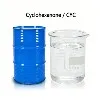

Acetonitrile is an important organic compound. The acetonitrile molecular formula is CH₃CN (also written as C₂H₃N). This colorless, transparent liquid is a powerful polar aprotic solvent capable of dissolving a wide range of organic, inorganic, and gaseous substances, and it is fully miscible with water and most common alcohols. As a key industrial solvent and chemical feedstock, acetonitrile plays a critical role across the pharmaceutical, chemical separation, electronics, and agrochemical industries.

Acetonitrile Structure: C2H3N or CH3CN?
Acetonitrile is the simplest organic nitrile - a class of compounds defined by a carbon atom triple-bonded to a nitrogen atom (C≡N). Its structure is written as H₃C−C≡N: a methyl group (CH₃) bonded to a carbon that is triple-bonded to nitrogen.
The acetonitrile molecular formula is often written two different ways, and both are correct - they just serve different purposes:
- CH₃CN is the structural (condensed) formula. It shows how the atoms are actually connected - a methyl group attached to a nitrile carbon - which is why this form is preferred in chemistry literature and safety documentation, since it communicates the functional group at a glance.
- C₂H₃N is the molecular formula. It simply totals the atoms in the molecule (2 carbon, 3 hydrogen, 1 nitrogen) without showing how they're bonded. This form is more common in database indexing and formula-matching searches.
Acetonitrile is also commonly abbreviated MeCN or referred to by its older common name, methyl cyanide.

Acetonitrile Molecular Formula and Properties
| Property | Value |
|---|---|
| Chemical Name | Acetonitrile |
| Synonyms | Methyl cyanide, Cyanomethane, MeCN, ACN |
| CAS Number | 75-05-8 |
| Molecular Formula | CH₃CN / C₂H₃N |
| Molecular Weight | 41.05 g/mol |
| Appearance | Colorless, transparent liquid |
| Odor | Mild, ether-like |
| Solvent Type | Polar aprotic |
| Density (20°C) | ~0.786 g/cm³ |
| Melting Point | −45.7°C |
| Boiling Point | ~81–82°C |
| Vapor Pressure (20°C) | ~9.7 kPa |
| Flash Point (closed cup) | ~2°C |
| Dielectric Constant (25°C) | ~36 |
| Viscosity (25°C) | ~0.37 mPa·s |
| Refractive Index (20°C) | ~1.344 |
| Water Solubility | Completely miscible |
| Solubility in Organics | Miscible with alcohols, acetone, ether, chloroform |
| UV Cutoff | ~190 nm |
| Stability | Stable under normal storage conditions |
Why Acetonitrile's Properties Matter
Acetonitrile's combination of high polarity, low UV cutoff (~190 nm), and full miscibility with water is what makes it the dominant solvent choice for HPLC (high-performance liquid chromatography): it dissolves a broad range of analytes, doesn't interfere with UV detection at most wavelengths used in analysis, and mixes cleanly with aqueous mobile phases. Its relatively low boiling point (~81–82°C) also allows it to be evaporated off during sample workup without excessive heating.
Acetonitrile Applications
- Pharmaceutical Industry Acetonitrile is a critical solvent in synthesizing antibiotics, vitamins, and other pharmaceutical intermediates. It is especially important as the mobile phase in HPLC systems used for drug purification and analytical testing.
- Chemical Separation Acetonitrile enables efficient separation of butadiene from C4 hydrocarbon streams via extractive distillation, commonly achieving purities above 99%. It is also used to separate acetonitrile-toluene azeotropes in fine chemical processing.
- Electronics Industry High-purity acetonitrile is used as a cleaning agent for electronic components, particularly in semiconductor and LCD panel manufacturing where cleanroom-grade purity is required.
- Pesticides and Agrochemicals Acetonitrile serves as an important synthesis intermediate in the production of herbicides and insecticides.

Safety Considerations
Acetonitrile is flammable (flash point ~2°C) and toxic if inhaled, ingested, or absorbed through skin in significant quantities, as it can metabolize into cyanide compounds in the body. Recommended precautions include:
- Handle only in well-ventilated areas or under fume hood extraction.
- Store away from heat, open flames, and strong oxidizing agents.
- Use appropriate PPE (gloves, eye protection) to avoid skin and eye contact.
- Always consult the current Safety Data Sheet (SDS) for full handling, storage, and exposure-limit guidance.

FAQ
What is the molecular formula of acetonitrile?
The acetonitrile molecular formula is C₂H₃N, commonly written as CH₃CN to show its structure.
Is acetonitrile CH3CN or C2H3N?
Both are correct. CH₃CN is the structural formula showing how the atoms are bonded; C₂H₃N is the molecular formula showing the total atom count.
What is another name for acetonitrile?
Acetonitrile is also known as methyl cyanide, cyanomethane, MeCN, or ACN.
What is acetonitrile used for?
It is primarily used as an HPLC solvent in pharmaceutical analysis, as a chemical separation agent, as a cleaning solvent in electronics manufacturing, and as an intermediate in agrochemical synthesis.
Is acetonitrile the same as acetone?
No. Despite similar-sounding names, acetonitrile (CH₃CN) is a nitrile with a carbon-nitrogen triple bond, while acetone (CH₃COCH₃) is a ketone with a carbon-oxygen double bond. They have different structures, properties, and applications.
Tianjin Gnee Biotech Co., Ltd. : Supplier of Acetonitrile (CAS 75-05-8)
Tianjin Gnee Biotech Co., Ltd. supplies acetonitrile(ACN) that meets both industrial- and laboratory-grade standards, serving customers in the pharmaceutical, electronics, and fine chemical industries. Our capabilities include:
- ISO 9001 / ISO 14001 / GMP certification available
- Own manufacturing facility with full hazardous chemical production permits
- Full documentation support: COA, MSDS, TDS, SGS testing
- Compliance with EU REACH requirements
- Established export experience to Southeast Asia, South America, the Middle East, and Africa
- Single-batch supply of 20–200 MT, with annual contract support available
For a quotation, technical data sheet, or samples, please contact us.