
Introduction
Cyclopentane for blowing agent applications is a zero-ODP, hydrocarbon-based physical blowing agent (CAS 287-92-3) that has become the global default for rigid polyurethane foam insulation - used in refrigerators, freezers, and building panels. It works by vaporizing during the polyurethane reaction, creating the closed-cell gas pockets that give rigid PU foam its insulating power. It became the mainstream choice because it combines zero ozone depletion potential, very low global warming potential, and excellent thermal insulation performance in a package that's cheaper than the fluorinated alternatives it replaced. It's used primarily across three industries: home appliance manufacturing (refrigerators, freezers, water heaters), construction (insulated sandwich panels, PU boards), and cold chain/logistics (cold storage, insulated pipework).

What Is Cyclopentane for Blowing Agent?
Definition: Cyclopentane is a five-membered saturated cyclic hydrocarbon (a cycloalkane) used as a physical blowing agent in rigid polyurethane (PU) foam production. Unlike chemical blowing agents that generate gas through a reaction (like water reacting with isocyanate to form CO₂), cyclopentane is a physical blowing agent - it works simply by evaporating from liquid to gas under the heat generated by the polyurethane reaction, with no chemical change to the cyclopentane itself.
- CAS Number: 287-92-3
- Molecular Formula: C₅H₁₀
- Type: Physical blowing agent (hydrocarbon)
- Ozone Depletion Potential (ODP): 0 (zero)
- Global Warming Potential (GWP): ~11 (near-zero, compared to hundreds or thousands for fluorinated alternatives)
Because cyclopentane contains no chlorine or fluorine atoms, it cannot participate in the catalytic ozone-destruction cycle that made older blowing agents like CFC-11 and HCFC-141b environmentally damaging - this is the structural reason behind its zero ODP rating.

Why Is Cyclopentane Used as a Blowing Agent?
Cyclopentane's dominance in rigid PU foam isn't accidental - it's the result of several properties lining up well for this specific application:
✔ Low thermal conductivity - Cyclopentane gas trapped in the foam's closed cells has a low thermal conductivity (k-factor), which is what actually gives rigid PU foam its insulating power. A lower k-factor means better insulation per unit of foam thickness.
✔ Proper boiling point - At 49°C, cyclopentane's boiling point sits in a practical range: high enough that it stays liquid during mixing and dispensing at room temperature, but low enough that the exothermic heat of the polyurethane reaction (which can reach 60–70°C+ inside the foam core) readily vaporizes it at the right moment in the reaction.
✔ Excellent foam expansion - Its vapor readily fills the developing polymer matrix, producing consistent, fine, closed-cell structure, which is essential for both insulation performance and dimensional stability.
✔ Low GWP - At a GWP of roughly 11, cyclopentane's climate impact is a small fraction of HFC-245fa's (GWP 1,030), which matters increasingly under global HFC phase-down commitments (see the regulatory section below).
✔ Zero ODP - No chlorine or fluorine content means no ozone-layer impact, keeping it compliant with the Montreal Protocol without needing a phase-out schedule of its own.
✔ Good compatibility with polyols - While cyclopentane's solubility in polyether polyol is lower than some alternatives (typically requiring lower-viscosity polyol systems to formulate around this), it's well-characterized and widely supported by polyol suppliers, making formulation predictable at scale.
Each of these properties addresses a specific failure mode of older or competing blowing agents: HCFC-141b had a real (if modest) ODP; HFCs have very high GWP; water-blown systems alone tend to produce lower insulation performance and higher foam density. Cyclopentane's property profile is why it displaced HCFC-141b as the default choice across most of the world's refrigerator manufacturing between roughly 2003 and 2015.

How Does Cyclopentane Work in Polyurethane Foam?
The foaming process follows a consistent sequence, whether in a refrigerator cabinet mold or a continuous sandwich panel line:
Liquid Cyclopentane (premixed into the polyol component)
↓
Mixed with Polyol + Isocyanate (high-pressure mixing head)
↓
Exothermic Polyurethane Reaction Begins (polyol + isocyanate → polymer, releasing heat)
↓
Reaction Heat Vaporizes the Cyclopentane (liquid → gas, expanding in volume)
↓
Expanding Gas Forms Closed Cells (trapped within the forming polymer matrix)
↓
Foam Cures and Sets (rigid closed-cell structure locks in, trapping the cyclopentane gas)
↓
Finished Insulation (the trapped gas's low thermal conductivity delivers the insulating effect)
A few details matter at each stage. Cyclopentane is typically pre-blended into the polyol component (the "B-side") before it ever reaches the mixing head, since it needs to be uniformly dispersed for consistent cell structure. Because its solubility in standard polyether polyols is limited, formulators generally use lower-viscosity polyol blends specifically designed to carry cyclopentane in solution until the reaction begins. Once the exothermic reaction kicks off - polyurethane formation is strongly exothermic, and core temperatures can exceed 60–70°C - the rising temperature vaporizes the dissolved cyclopentane. This gas expansion happens simultaneously with polymer network formation, so the foam's cell walls form around the expanding gas bubbles. If timing is off (reaction too fast or too slow relative to vaporization), the result is uneven cell structure, poor dimensional stability, or foam collapse - which is why blowing agent selection and polyol/catalyst tuning have to be engineered together, not chosen independently.
Physical and Chemical Properties
| Property | Value |
|---|---|
| CAS Number | 287-92-3 |
| Molecular Formula | C₅H₁₀ |
| Molecular Weight | 70.13 g/mol |
| Boiling Point | 49°C (49.3°C, lit.) |
| Melting Point | −94°C |
| Flash Point (closed cup) | −37°C |
| Density | 0.745–0.751 g/cm³ (20–25°C) |
| Vapor density (vs. air) | ~2.4 |
| Explosive limits (in air) | 1.4–8.7% v/v |
| Autoignition temperature | 361°C |
| ODP | 0 |
| GWP (100-yr) | ~11 |
Cyclopentane vs Other Blowing Agents
This is where most competing content stays superficial - a real comparison needs to weigh environmental compliance against cost and process complexity, since no single blowing agent wins on every axis:
| Blowing Agent | ODP | GWP (100-yr) | Flammability | Relative Cost | Insulation Performance |
|---|---|---|---|---|---|
| Cyclopentane | 0 | ~11 (very low) | Yes (flammable) | Low–Medium (~USD 900–1,200/ton) | Excellent |
| HCFC-141b | 0.11 | 725 | No | High (legacy, being phased out) | Good |
| HFC-245fa | 0 | 1,030 | No | High (~USD 9,000–12,000/ton) | Excellent |
| Water (CO₂-blown) | 0 | 0 (direct) | No | Low | Moderate |
Industrial Applications
Refrigerator insulation - The dominant use case; cyclopentane-blown rigid foam forms the insulating core between the inner and outer cabinet walls.
Freezer insulation - Same core chemistry, typically formulated for somewhat higher-density foam given lower operating temperatures.
Water heaters - Rigid foam insulation around storage tanks to reduce standby heat loss.
Sandwich panels - Continuous-line production of insulated metal-faced panels for cold storage and industrial construction.
Cold storage facilities - Insulated wall and ceiling panels for warehouses and logistics facilities requiring temperature control.
PU boards - Rigid insulation boards used in construction for walls, roofs, and floors.
Building insulation - General construction applications where rigid PU/PIR foam is specified for its high insulation-per-thickness performance.
Environmental Benefits
Cyclopentane's environmental profile is central to why it's become the industry standard, and this ties directly into ongoing global regulatory shifts:
Montreal Protocol compliance - As a non-halogenated hydrocarbon, cyclopentane sits entirely outside the substances controlled by the Montreal Protocol, avoiding both the phase-out schedules applied to CFCs/HCFCs and the phase-down schedules now applied to HFCs under the 2021 Kigali Amendment.
Zero ODP - No contribution to stratospheric ozone depletion, unlike HCFC-141b (ODP 0.11).
Lower GWP - At roughly GWP 11, cyclopentane's per-ton climate impact is a small fraction of HFC-245fa's GWP of 1,030 - a difference that matters more every year as carbon pricing and F-gas quotas tighten.
Alignment with the F-gas phase-down trend - The EU's revised F-Gas Regulation targets an 85% reduction in HFC consumption by 2036, and China has moved to prohibit HCFC-141b in spray-applied polyurethane foam production starting July 1, 2026. Both trends push the market further toward hydrocarbons like cyclopentane and, for some applications, HFOs.
Cyclopentane Safety and Handling
Cyclopentane's main operational challenge is flammability, and this needs real detail rather than a one-line disclaimer:
Highly flammable - With a flash point of −37°C and an explosive range of roughly 1.4–8.7% in air, cyclopentane vapor can ignite at essentially any ambient temperature if a source of ignition is present.
Explosion-proof equipment - Mixing heads, storage tanks, transfer pumps, and electrical fittings in cyclopentane handling areas should be rated for hazardous locations (commonly ATEX Zone 1 in the EU or equivalent classifications elsewhere).
Ventilation - Adequate mechanical ventilation is required in mixing, storage, and foam-curing areas to keep vapor concentrations well below the lower explosive limit.
Nitrogen blanketing - Storage tanks are commonly blanketed with nitrogen to keep the vapor space free of oxygen, reducing ignition risk even if a leak occurs.
Continuous LEL monitoring - Facilities typically install lower-explosive-limit (LEL) gas detection with staged responses - for example, automatic alarms around 25% of LEL and automatic shutdown/isolation around 50% of LEL - rather than relying on periodic manual checks.
Storage - Cool, well-ventilated, away from ignition sources and oxidizers, consistent with other Class IB flammable liquid storage requirements.
Packaging and Transportation
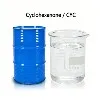
150kg Drum - Standard steel drum packaging for smaller-volume buyers or trial orders.
ISO Tank - Bulk shipment format for larger manufacturers, typically 20,000–24,000 liters, reducing per-unit logistics cost for high-volume users.
UN Classification - Cyclopentane is classified as a Class 3 flammable liquid for transport purposes (UN 1146), requiring appropriate placarding, documentation, and carrier compliance.
Storage temperature - Cool ambient conditions, away from direct sunlight and heat sources, consistent with its low flash point.
How to Choose a Cyclopentane Supplier
Purity and documentation matter more for cyclopentane than buyers sometimes assume, since even small amounts of moisture or impurities can affect polyol compatibility and foam cell structure:
Purity - Industrial cyclopentane for blowing agent use is typically supplied at 95–99.5%; confirm the specification matches your formulation requirements.
Moisture content - Water content should be tightly controlled, since moisture can interfere with the polyurethane reaction and foam cell structure.
Certificate of Analysis (COA) - Every shipment should come with a COA confirming purity, water content, and other relevant specs - don't rely on a generic product page spec sheet alone.
REACH compliance - For buyers importing into or manufacturing for the EU, confirm the supplier's cyclopentane is REACH-registered.
ISO certification - Suppliers with ISO 9001 (quality management) or equivalent certification generally offer more consistent batch-to-batch quality, which matters for maintaining stable foam properties across production runs.
FAQs
What is cyclopentane for blowing agent?
It's a physical blowing agent - a hydrocarbon (C₅H₁₀, CAS 287-92-3) used in rigid polyurethane foam production. It works by vaporizing under the heat of the polyurethane reaction, creating the gas-filled closed cells that give rigid foam its insulating properties.
Why is cyclopentane better than HCFC-141b?
Cyclopentane has zero ozone depletion potential, while HCFC-141b has an ODP of 0.11 - a meaningful difference under Montreal Protocol compliance. Cyclopentane is also generally lower-cost. The trade-off is that cyclopentane is flammable, requiring explosion-proof handling equipment, while HCFC-141b is non-flammable but is being phased out in more jurisdictions (including a full ban in Chinese spray-foam applications from mid-2026).
Is cyclopentane flammable?
Yes. It has a flash point of −37°C and an explosive range of roughly 1.4–8.7% in air, meaning it requires explosion-proof equipment, adequate ventilation, and nitrogen blanketing during storage and processing.
Can cyclopentane replace HFC-245fa?
In most rigid foam applications, yes - cyclopentane delivers comparable insulation performance at a fraction of the cost and with a GWP around 11 versus HFC-245fa's 1,030. HFC-245fa remains preferred in some applications where non-flammability is a hard requirement and the additional chemical cost is acceptable, but it faces a mandated phase-down under the Kigali Amendment through 2036.
What purity is recommended for blowing agent applications?
Industrial grades of 95% to 99.5% purity are standard for rigid PU foam blowing agent use, with the specific grade depending on the formulation and foam performance requirements. Always confirm water content specifications with your supplier's COA.
How should cyclopentane be stored?
In cool, well-ventilated conditions away from ignition sources and oxidizers, typically in nitrogen-blanketed storage tanks with continuous LEL gas detection.
What industries use cyclopentane?
Primarily household appliance manufacturing (refrigerators, freezers, water heaters), construction (insulated sandwich panels, PU boards, building insulation), and cold chain logistics (cold storage facilities, insulated pipework).
What is the boiling point of cyclopentane?
Approximately 49°C (49.3°C per reference literature) at standard atmospheric pressure - a key property that allows it to remain liquid during mixing but vaporize readily under the heat of the polyurethane reaction.
Is cyclopentane environmentally friendly?
Relative to the blowing agents it replaced, yes: zero ODP and a GWP of roughly 11, versus HCFC-141b's ODP of 0.11 and HFC-245fa's GWP of 1,030. It isn't impact-free - it's flammable and a VOC - but its environmental profile is a major reason it became the global default for rigid PU foam.
What packaging is available for cyclopentane?
Common options include 150kg steel drums for smaller orders and ISO tanks (typically 20,000–24,000 liters) for bulk industrial buyers, shipped under UN 1146 Class 3 flammable liquid transport classification.
About Cyclopentane Supply
Tianjin Gnee Biotech Co., Ltd. supplies industrial-grade Cyclopentane (CAS 287-92-3) for rigid polyurethane foam blowing agent applications, refrigerator and freezer insulation, sandwich panel manufacturing, and cold storage insulation. Contact us for technical specifications, COA, SDS, packaging options, and bulk quotations.