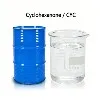

The density of acetic acid (glacial acetic acid) is approximately 1.049–1.05 g/cm³ (or g/mL) at 20–25°C, making it slightly denser than water and an important parameter in chemical and industrial applications.
The standard acetic acid density is widely reported around 1.05 g/mL at 20°C, with precise measurements of 1.049 g/mL, confirming a very narrow and stable range. This density of acetic acid is about 4–5% higher than water (1.00 g/mL), which directly affects its mixing behavior, layering characteristics, and volumetric calculations in laboratory and industrial use.

In terms of acetic acid density g/ml, temperature has a minor influence on its value. At 25°C, the glacial acetic acid density typically remains within 1.049–1.050 g/cm³, while slight decreases may occur at higher temperatures due to thermal expansion. This stability is essential for precise dosing, chemical synthesis, and formulation processes where accurate concentration control is required.
The glacial acetic acid density is also closely linked to its physical properties. It has a melting point of 16.6°C, where it solidifies into ice-like crystals, and a boiling point of 117.9°C, allowing it to exist in a stable liquid form over a wide temperature range. These characteristics, combined with its density stability, make it a reliable solvent and reagent in chemical production.
From an application standpoint, the acetic acid density g/ml value plays a key role in industries such as pharmaceuticals, polymers, and organic synthesis. Its higher density compared to water ensures predictable mixing and reaction performance, supporting its use in producing acetate esters, vinyl acetate monomers, and various chemical intermediates where precision and consistency are critical.
Visit our product page to learn more, or contact us today for a fast response.

Other Physical Properties of Glacial Acetic Acid
| Physical Property | Value |
|---|---|
| Molecular Formula | CH3COOH |
| Appearance | Colorless transparent liquid |
| Purity | ≥99.5% / ≥99.8% |
| Density at 20°C | 1.049 g/cm³ |
| Melting Point | 16.6°C |
| Boiling Point | 117.9°C |
| Flash Point | Approximately 39°C |
| Solubility | Completely miscible with water, ethanol, and ether |
| Odor | Strong pungent vinegar-like odor |
| Vapor Pressure | Approximately 15.7 mmHg at 25°C |
| Viscosity | Approximately 1.22 mPa·s at 25°C |
| UN Number | UN2789 |
| Hazard Class | Class 8 (Corrosive) |
| Packaging Types | 200kg iron drum / 1000kg IBC ton drum |
| Storage Conditions | Cool, dry, ventilated area away from oxidizers |
| Shelf Life | Typically 12 months |
| Moisture Content | ≤0.1% |
| Iron Content | ≤0.00004% |
FAQ About Acetic Acid
What is the chemical formula of acetic acid?
The chemical formula of acetic acid is CH3COOH.
Why is acetic acid called glacial acetic acid?
Pure acetic acid freezes at 16.6°C and forms ice-like crystals, so it is called "glacial" acetic acid.
How is acetic acid used in industries?
Acetic acid is widely used in:
- Chemical manufacturing
- Textile processing
- Food additives
- Pharmaceuticals
- Industrial solvents
Is acetic acid a strong or weak acid?
Acetic acid is a weak organic acid commonly used in food and industrial applications.
What are the main sources of acetic acid?
Most industrial acetic acid is produced from methanol carbonylation. It is also naturally found in vinegar.
Is acetic acid safe for consumption?
Diluted acetic acid in vinegar is safe for food use, but concentrated glacial acetic acid is corrosive and must be handled carefully.