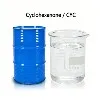

Acetonitrile Solvent Profile
Acetonitrile (CH₃CN) is the simplest organic nitrile and a polar aprotic solvent. It is polar due to its strong C≡N bond dipole, but aprotic because it has no hydrogen atoms capable of forming hydrogen bonds - this combination is what makes it uniquely effective in both HPLC and organic synthesis. It is a colorless, volatile liquid, fully miscible with water, with low viscosity, low UV absorbance and good thermal and chemical stability. These properties make it one of the most widely used solvents in both analytical chemistry and industrial processing.

What Acetonitrile Does as a Solvent
1. HPLC Mobile Phase
Acetonitrile is the standard mobile-phase component in high-performance liquid chromatography (HPLC), particularly reversed-phase chromatography, because of its low UV absorbance, low viscosity and excellent elution strength. HPLC-grade acetonitrile is supplied with verified UV transmission specifications.
2. Chromatography and Sample Preparation
It is used in general chromatography, sample preparation and analytical methods as a polar solvent that dissolves a wide range of analytes.
3. Organic Synthesis and Purification
Acetonitrile is used as a solvent in organic synthesis, including for reactions that require aprotic conditions, and in purification processes such as recrystallization and washing. It also serves as a raw material for synthesizing compounds such as acrylonitrile and pharmaceuticals and pesticides intermediates.
4. Crystallization Medium
In the pharmaceutical and fine-chemical industries, acetonitrile is used as a crystallization solvent to control crystal form and purity of active ingredients.
5. Extraction Solvent
Acetonitrile is used to extract fatty acids from oils and to extract natural products and active components in laboratory and industrial processes.
6. Reaction Medium
Because it is aprotic and miscible with water, acetonitrile serves as a reaction medium for a variety of organic and pharmaceutical reactions.
Grades Available
| Grade | Typical use |
|---|---|
| HPLC grade | Mobile phases and analytical chromatography |
| Analytical (AR) grade | Laboratory synthesis and analysis |
| Industrial grade | Extraction, synthesis and production processes |
Handling Notes
Acetonitrile is flammable and moderately toxic (metabolized to cyanide in the body); handle with ventilation and appropriate PPE.
Keep containers sealed - acetonitrile absorbs moisture and is miscible with water.
Store away from oxidizers and ignition sources; refer to the acetonitrile safety data sheet (SDS) for full handling, storage and emergency procedures before use.
Frequently Asked Questions
Why Is Acetonitrile Used In HPLC?
Its low UV absorbance, low viscosity and strong elution strength make it an ideal mobile-phase component, especially in reversed-phase HPLC.
Is Acetonitrile Miscible With Water?
Yes. Acetonitrile is fully miscible with water in all proportions, and its solubility in water is unlimited at room temperature, which is why it works well in aqueous-organic mobile phases.
What Grades Of Acetonitrile Are Available?
HPLC grade (with verified UV transmission), analytical grade and industrial grade are available; select the grade per your application.
Is Acetonitrile Safe To Use As A Solvent?
It requires care: it is flammable and moderately toxic, metabolizing to cyanide in the body. Use with ventilation and PPE and follow the SDS.
Is Acetonitrile Polar Or Nonpolar?
Acetonitrile is a polar solvent - its C≡N bond creates a strong dipole moment - but it is classified as aprotic because it lacks hydrogen atoms available for hydrogen bonding, unlike protic polar solvents such as methanol or water.
How Does Acetonitrile Compare To Methanol In HPLC?
Both are common reversed-phase HPLC solvents, but acetonitrile generally offers lower viscosity, lower UV cutoff and stronger elution strength than methanol, resulting in sharper peaks and shorter run times, though methanol is sometimes preferred for its lower cost and different selectivity.