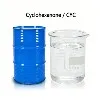

Mixed Xylene, also known as Mixed Xylenes, Xylene Mixture, Xylol, or Industrial Xylene, is an important aromatic hydrocarbon used in chemical manufacturing, paints and coatings, printing inks, adhesives, rubber processing, and other industrial applications. CAS No. 1330-20-7 identifies mixed xylenes rather than a single pure xylene isomer.
For buyers, however, understanding the market is only part of the procurement process. The actual purchase decision depends on grade, purity, isomer composition, ethylbenzene content, packaging, MOQ, documentation, loading port, Incoterms, lead time, and final application.
This guide combines current mixed xylene market data with practical procurement information to help international buyers evaluate Mixed Xylene suppliers, specifications, pricing factors, packaging options, and export requirements.
For buyers sourcing Mixed Xylene from China, Tianjin Gnee Biotech Co., Ltd. can provide product specifications, COA, SDS, packaging and shipping information for quotation evaluation.
Quick Mixed Xylene Buyer Overview
| Item | Information |
|---|---|
| Product | Mixed Xylene |
| CAS No. | 1330-20-7 |
| Molecular Formula | C₈H₁₀ |
| Common Names | Mixed Xylenes, Xylene Mixture, Xylol, Industrial Xylene |
| Appearance | Clear, colorless liquid |
| Main Components | o-Xylene, m-Xylene, p-Xylene and ethylbenzene |
| Main Uses | Solvent, paints & coatings, chemical manufacturing, printing inks, adhesives, rubber and other industrial applications |
| Typical Packaging | Steel drums, IBC totes, ISO tanks and bulk shipment, depending on supply arrangement |
| Key Documents | COA, SDS and applicable export/compliance documents |
| Main Price Factors | Feedstock cost, product grade, specification, order quantity, packaging, freight and Incoterms |
The exact composition and specification should always be confirmed against the supplier's current COA or product specification sheet. Commercial mixed xylene is a blend, so its composition can vary by production source and grade. PubChem identifies CAS 1330-20-7 as mixed isomers and notes that commercial mixed xylene commonly contains m-xylene, o-xylene, p-xylene and ethylbenzene.
Global Mixed Xylene Market Size and Growth
Published market research reports give different estimates for the global mixed xylene market because they use different market definitions, base years, regional assumptions, and forecasting methodologies.
According to Fortune Business Insights, the global mixed xylene market was valued at USD 56.72 billion in 2025 and is projected to reach USD 102.62 billion by 2034, representing a reported CAGR of 6.81%. The same report places the 2026 market size at USD 60.58 billion.
Data Bridge Market Research estimates the global mixed xylenes market at USD 60.57 billion in 2024, with a projected value of USD 77.33 billion by 2032 and a CAGR of 3.10%.
| Market Research Source | Base Year | Market Size | Forecast Year | Forecast Size | CAGR |
|---|---|---|---|---|---|
| Fortune Business Insights | 2025 | USD 56.72B | 2034 | USD 102.62B | 6.81% |
| Data Bridge Market Research | 2024 | USD 60.57B | 2032 | USD 77.33B | 3.10% |
Why Are Mixed Xylene Market Estimates Different?
The difference does not necessarily indicate conflicting information about the underlying industry.
Market research firms may define the market differently by:
- Product grades included
- Applications covered
- Geographic markets
- Base year
- Revenue versus volume methodology
- Treatment of downstream applications
- Forecast period
For procurement purposes, buyers should therefore use published market size figures as market-direction indicators, while relying on current supplier quotations, regional market conditions and logistics costs for actual purchasing decisions.
What Is Mixed Xylene?
Mixed Xylene is a commercial mixture of aromatic hydrocarbons containing three xylene isomers - ortho-xylene, meta-xylene and para-xylene - together with ethylbenzene and, depending on the product specification, small amounts of other aromatic components.
CAS 1330-20-7 is commonly used for mixed xylene.
Unlike pure o-xylene, m-xylene or p-xylene, Mixed Xylene is not defined by one single isomer. Its composition is therefore particularly important when purchasing the product for a specific industrial process.
Commercial mixed xylenes are generally associated with petroleum-derived aromatic streams. PubChem describes mixed xylenes as a clear, colorless liquid and identifies applications including solvents, paints, adhesives, printing, rubber and leather processing.
Typical Mixed Xylene Components
| Component | Role in Mixed Xylene |
|---|---|
| m-Xylene | Often the major isomer in commercial mixed xylene |
| o-Xylene | Aromatic component used in downstream chemical production |
| p-Xylene | Important feedstock for polyester-related production |
| Ethylbenzene | Common component of commercial mixed xylene |
| Other aromatics | May be present depending on specification and production source |
Important: Composition ranges should not be treated as a universal specification. Buyers should request the supplier's actual specification or COA before placing an order.
Mixed Xylene Supply Chain
Mixed Xylene is closely connected to the petroleum refining and petrochemical industry.
Commercial xylene streams are produced from petroleum-derived feedstocks, including aromatic streams generated during refinery and petrochemical processing. Mixed xylenes can subsequently be separated or further processed into individual xylene isomers for downstream applications.
This creates two major procurement markets:
1. Mixed Xylene for Downstream Chemical Production
Some buyers purchase mixed xylene as a feedstock for producing or separating xylene isomers.
The final application can include downstream production of materials associated with:
- Para-xylene
- Ortho-xylene
- Meta-xylene
- PTA and polyester value chains
- Chemical intermediates
2. Mixed Xylene as an Industrial Solvent
Other buyers purchase Mixed Xylene as a finished industrial solvent.
Common applications include:
- Paints and coatings
- Printing inks
- Adhesives
- Rubber processing
- Industrial cleaning
- Chemical manufacturing
- Thinners and solvent formulations
PubChem notes that the majority of commercial mixed xylenes are used in producing the individual xylene isomers, while another portion is used directly in paints, coatings and other solvent applications.
Mixed Xylene Applications
1. Paints and Coatings
Mixed Xylene is widely used as an aromatic solvent in paints and coatings because of its solvency characteristics and compatibility with many resin systems.
Typical applications include:
- Industrial coatings
- Protective coatings
- Automotive coatings
- Metal coatings
- Construction coatings
- Paint thinners
The appropriate grade should be selected according to the formulation requirements of the final product.
2. Printing Inks
Mixed Xylene can be used as a solvent in certain printing ink formulations where aromatic solvency is required.
The appropriate specification depends on:
- Resin compatibility
- Evaporation requirements
- Solvency
- Color
- Moisture
- Impurity limits
3. Adhesives and Sealants
Mixed Xylene can act as a solvent for selected adhesive and sealant formulations.
Before purchasing, formulators should confirm compatibility with the resin system and the required evaporation characteristics.
4. Chemical Manufacturing
Mixed Xylene is also used as a feedstock or intermediate material in the production and separation of aromatic chemicals.
For these applications, isomer composition and impurity levels can be more important than simply the headline purity percentage.
5. Rubber and Related Industrial Applications
Mixed Xylene may be used as an aromatic solvent in selected rubber-processing and industrial formulations.
The actual grade should be matched to the formulation and local regulatory requirements.
Mixed Xylene Market by Region
Asia-Pacific remains an important mixed xylene market because of its large petrochemical, polyester, packaging, coatings and manufacturing industries.
Fortune Business Insights estimates the regional shares of the global mixed xylene market at approximately 36% for Asia-Pacific, 28% for North America and 26% for Europe, based on its reported 2025 market analysis.
Asia-Pacific
Asia-Pacific is supported by:
- Large petrochemical production capacity
- Polyester and packaging manufacturing
- Paints and coatings production
- Growing industrial consumption
- Strong chemical manufacturing infrastructure
China and other major Asian manufacturing economies are important participants in the regional xylene supply chain.
North America
The United States has a significant refining and petrochemical infrastructure, particularly along the Gulf Coast.
For buyers sourcing from North America, pricing is influenced by:
- Crude oil and feedstock costs
- Refinery operating rates
- Aromatics supply
- Domestic demand
- Export economics
- Freight
Europe
European buyers generally need to consider both commercial specifications and regulatory requirements when importing or using Mixed Xylene.
For EU-bound shipments, buyers should confirm applicable REACH, CLP, transport and labeling requirements for the specific substance and intended use. ECHA lists CAS 1330-20-7 under xylene and provides applicable regulatory obligations and dangerous-goods information.
India
India remains an important market for aromatic chemicals because of its growing petrochemical, polyester, coatings and chemical manufacturing sectors.
For Indian buyers, supplier selection should consider:
- Product specification
- Import requirements
- Port of delivery
- Packaging
- Bulk versus drum shipment
- Freight
- Payment terms
- Lead time
Mexico
Mexico is an important industrial and manufacturing market within North America, with demand associated with coatings, chemicals, automotive manufacturing and other industrial applications.
For buyers importing Mixed Xylene into Mexico, the practical procurement calculation should include product price, freight, customs requirements and destination handling rather than comparing the chemical price alone.
Mixed Xylene Price Trends
There is no single global Mixed Xylene price. Actual quotations depend on product specification, quantity, packaging, origin, destination, freight, and Incoterms.
The main factors affecting Mixed Xylene prices include:
- Crude oil and feedstock costs
- Refinery and aromatics supply
- PTA, PET, and chemical demand
- Product grade and specification
- Order quantity
- Packaging
- Ocean freight
- Destination market
- Exchange rates
- Import costs
A buyer should therefore compare the total landed cost, rather than choosing a supplier based only on the lowest price per metric ton.
FOB vs CIF Mixed Xylene Price
FOB (Free On Board) generally means the supplier delivers the goods on board the vessel at the agreed loading port, while the buyer arranges the main international freight.
CIF (Cost, Insurance and Freight) includes the product cost, freight, and insurance to the agreed destination port.
For example, a FOB Tianjin quotation and a CIF Rotterdam quotation cannot be compared directly without considering freight, insurance, and other logistics costs.
When requesting a Mixed Xylene quotation, buyers should specify the destination port and preferred Incoterm.
Mixed Xylene Procurement Guide
Before placing an order, buyers should confirm the product specification and commercial terms.
| Buyer Should Check | Key Information |
|---|---|
| Product | Mixed Xylene |
| CAS No. | 1330-20-7 |
| Grade | Solvent / Technical / Isomer-related grade |
| Purity | Required specification |
| Composition | o-Xylene / m-Xylene / p-Xylene / Ethylbenzene |
| COA | Batch quality verification |
| SDS | Safety, handling and transport information |
| Packaging | Steel Drum / IBC / ISO Tank |
| MOQ | Confirm with supplier |
| Loading Port | Confirm before ordering |
| Incoterm | FOB / CFR / CIF / DAP |
| Lead Time | Confirm before payment |
| Regulatory Documents | Destination-specific requirements |
Mixed Xylene Specification
Because Mixed Xylene is a mixture rather than a single pure isomer, buyers should evaluate composition as well as overall purity.
Depending on the intended application, a specification may include:
- Purity
- o-Xylene content
- m-Xylene content
- p-Xylene content
- Ethylbenzene content
- Color
- Moisture
- Distillation range
- Density or specific gravity
- Other impurity limits
The exact specification should be agreed between the buyer and supplier before shipment.
COA and SDS
A Certificate of Analysis (COA) provides test results for a specific batch and helps buyers verify product quality.
An SDS (Safety Data Sheet) provides information about product hazards, handling, storage, personal protection, transportation, and emergency response.
Buyers should request the current COA and SDS before finalizing a purchase.
Mixed Xylene Packaging
Mixed Xylene may be supplied in different packaging formats depending on order volume and transportation requirements.
Steel drums are suitable for smaller commercial quantities and trial orders.
IBC totes can be used for medium-volume shipments.
ISO tanks are generally more suitable for larger-volume international shipments and regular industrial procurement.
Actual packing quantity should be confirmed with the supplier according to the packaging specification and transportation requirements.
Frequently Asked Questions About Mixed Xylene
What is Mixed Xylene?
Mixed Xylene is a commercial mixture of xylene isomers, primarily o-xylene, m-xylene and p-xylene, together with ethylbenzene and potentially other minor components. The common CAS number for mixed xylene is 1330-20-7.
What is Mixed Xylene used for?
Mixed Xylene is used as an industrial solvent and as a feedstock in chemical manufacturing. Applications include paints, coatings, printing inks, adhesives, rubber processing and downstream aromatic chemical production.
Is Mixed Xylene the same as Xylene?
In commercial chemical trading, "Mixed Xylene" generally refers to a mixture of xylene isomers rather than a single pure isomer. The term "xylene" can refer more broadly to the xylene family or, depending on context, mixed xylenes.
What is the difference between Mixed Xylene and o-Xylene?
Mixed Xylene contains multiple xylene isomers, while o-Xylene is a specific individual isomer with CAS 95-47-6.
Therefore, they should not be treated as interchangeable products when a manufacturing process requires a specific isomer.
What is the difference between Mixed Xylene and p-Xylene?
Mixed Xylene contains multiple aromatic components, while p-Xylene is a single xylene isomer. p-Xylene is an important feedstock in polyester-related production, while Mixed Xylene may be used as a solvent or as feedstock for isomer separation.
What is the difference between solvent-grade and isomer-grade Mixed Xylene?
Solvent-grade or technical-grade Mixed Xylene is generally purchased for direct solvent applications, while isomer-related grades are purchased according to composition requirements for downstream chemical processing.
The exact specification should be confirmed with the supplier before ordering.