

Selecting methylene chloride for industrial coatings requires evaluating its intended application, technical specifications, and regulatory status before purchasing. Methylene chloride, also known as dichloromethane (DCM), is an industrial solvent used in selected coating-removal, adhesive-related, and chemical processing applications. However, it is not a default solvent for modern coating formulations. For industrial buyers searching for a reliable methylene chloride supplier, the key considerations include CAS 75-09-2, product purity, moisture content, stabilizer requirements, destination-market regulations, and shipment documentation. Tianjin Gnee Biotech Co., Ltd. supplies industrial chemical raw materials and helps buyers review product requirements before requesting a quotation.
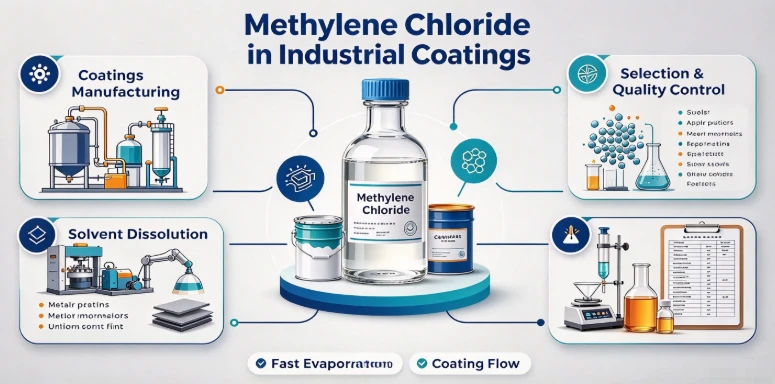
1. Methylene Chloride Applications in Industrial Coatings
Methylene chloride is primarily relevant to selected coating-removal and industrial processing applications rather than conventional paint formulations. Its low boiling point and ability to dissolve many organic compounds make dichloromethane useful in certain paint-stripping processes, adhesive-related applications, and specialized industrial cleaning operations. However, its suitability depends on the coating composition, substrate material, process conditions, and applicable regulations. Buyers evaluating methylene chloride for industrial coatings should distinguish between a solvent used to remove an existing coating and one intended to become part of a finished coating formulation. DCM's rapid evaporation can also affect process control, so it should not automatically be considered the best solvent for every industrial application.
2. Methylene Chloride Specifications and Purity Requirements
Choosing the right methylene chloride grade requires checking the actual product specification rather than relying on a purity claim alone. When purchasing industrial-grade dichloromethane, buyers should review the assay, water content, acidity, non-volatile residue, color, and stabilizer information where relevant to the intended application. These parameters help establish whether the product meets the buyer's process requirements. For example, a moisture-sensitive process may require a defined maximum water content, while a formulation sensitive to additives may require disclosure of the stabilizer system. Before placing a bulk methylene chloride order, request a batch-specific Certificate of Analysis (COA) and compare the reported values against the agreed purchase specification.
3. How to Choose a Reliable Methylene Chloride Supplier
A reliable methylene chloride supplier should provide clear product specifications, appropriate quality documentation, and transparent information about packaging and delivery conditions. When comparing dichloromethane suppliers in China, industrial buyers should assess more than the quoted price per metric ton. Check whether the supplier can provide a current Safety Data Sheet (SDS), a relevant Technical Data Sheet (TDS), and a COA for the supplied batch. Buyers should also confirm product traceability, available packaging, minimum order quantity (MOQ), lead time, and the export documents required for the destination market. For repeat purchases, consistent acceptance criteria and clear communication about specification changes can help reduce procurement risks. Any claims concerning ISO 9001 certification, manufacturing capacity, or long-term supply commitments should be verified before being used as purchasing criteria.
4. Methylene Chloride Purchasing and Regulatory Considerations
Before buying methylene chloride, buyers must confirm that the intended use is permitted in the destination market and that the proposed handling conditions meet applicable safety requirements. Regulations may differ for consumer paint stripping, professional use, and industrial operations, so a product's availability does not automatically establish that every application is legal. Buyers requesting a methylene chloride quotation should specify the destination country, intended end use, required grade, order quantity, packaging, and delivery terms. They should also review the current SDS, dangerous-goods transport requirements, and any additional documentation required for import or downstream use. Where DCM is restricted or unsuitable for the process, buyers should evaluate legally permitted alternatives based on solvent performance, substrate compatibility, and process-specific testing.
5. Request a Methylene Chloride Quote from Gnee Bio
To obtain a relevant methylene chloride quotation, buyers should provide the intended application, destination market, required specifications, quantity, and packaging preferences. Tianjin Gnee Biotech Co., Ltd. welcomes inquiries from industrial buyers sourcing dichloromethane (DCM, CAS 75-09-2) for eligible industrial applications. Providing the required purity, moisture limit, stabilizer information, delivery terms, and document requirements helps the supplier assess the request more efficiently. Contact our team to discuss product availability, obtain the applicable technical documentation, and request a quotation based on your purchasing requirements.
Request a Quote: Contact Tianjin Gnee Biotech Co., Ltd.