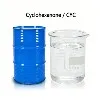

What Phenol 99% Is
Phenol, also called carbolic acid or hydroxybenzene, is an aromatic organic compound with CAS Registry Number 108-95-2 and molecular formula C6H6O. Its formula weight is 94.11 g/mol, from 6 x 12.011 (carbon), 6 x 1.008 (hydrogen) and 15.999 (oxygen). It is a colourless to pale pink crystalline solid with a melting point of about 40.5 °C, a boiling point of 181.7 °C and a density of about 1.07 g/cm³, and it is moderately soluble in water. The 99% material is refined phenol; the relevant specification, ASTM D2439, covers water content, solidification point, appearance and molten colour, which are the four parameters that matter most when the product is shipped or stored as a melt. Phenol is weakly acidic, with a pKa near 10, and it is corrosive and toxic, which shapes every part of its storage and dosing practice.
Antimicrobial and Preservative Function
Phenol is an antimicrobial agent. At higher concentrations it disrupts cell membranes and denatures cellular protein, which is why it has been used as a disinfectant, and it became the historical benchmark against which other disinfectants were compared. At much lower concentrations the effect is bacteriostatic rather than bactericidal, and it is this low-concentration activity that is exploited when phenol is used as a preservative. In liquid pharmaceutical presentations, phenol is added to inhibit microbial growth during repeated withdrawal from a multi-dose container, and the content is controlled within a narrow band, commonly in the region of 0.25% to 0.5% w/v. The preservative must meet two conditions at once: it must suppress microbial growth over the shelf life and it must stay within the finished-product limit, which is why the phenol content is assayed as a release and stability test rather than assumed from the charge weight.
Where Phenol 99% Can and Cannot Be Used
Phenol is used in disinfectant formulations, as a preservative in specific pharmaceutical and veterinary preparations, and as an industrial intermediate and antimicrobial in selected technical applications. It is the feedstock for phenolic resins, bisphenol A, caprolactam and a long list of downstream chemicals, and it is not a food preservative: phenol is not authorised as a food additive in major jurisdictions, and its antimicrobial use is confined to defined technical, cosmetic and pharmaceutical applications with their own concentration limits. Cosmetic use is restricted to specified product categories and maximum concentrations under the applicable cosmetic regulation, and any intended use must be checked against the current national rules for that product type. The practical conclusion for a formulator is straightforward: phenol 99% is a legitimate preservative in defined applications, but it is not a general-purpose preservative that can be swapped into a food, beverage or unrestricted consumer product.
Safety, Exposure Control and Handling
| Parameter | Data |
|---|---|
| CAS Registry Number | 108-95-2 |
| Formula / formula weight | C6H6O / 94.11 g/mol |
| Melting point | about 40.5 °C |
| Boiling point at 101.3 kPa | 181.7 °C |
| Density at 25 °C | about 1.07 g/cm³ |
| Purity, refined grade | 99% minimum, per ASTM D2439 |
| Occupational exposure, 8 h TWA | 5 ppm; skin notation applies |
| Main hazard | Corrosive; readily absorbed through skin; systemic toxicity |
Phenol is absorbed rapidly through intact skin, and the onset of systemic symptoms can be delayed, so skin contact must be treated as an emergency even when the exposed area looks small. Personal protective equipment should include chemical-resistant gloves and apron or suit, face and eye protection, and respiratory protection with local extraction wherever vapour or dust is generated. The 8-hour exposure limit of 5 ppm carries a skin notation, meaning that dermal absorption must be controlled independently of airborne concentration; routine air monitoring alone is not sufficient. First aid for skin contact is immediate removal of contaminated clothing and thorough irrigation with copious water while medical attention is obtained. Because the solidification point is about 40.5 °C, phenol is normally stored, transferred and dosed as a melt in heated, closed systems, which also reduces both exposure and moisture pick-up.
Specification, Storage and Dosing Control
Refined phenol is ordered against an assay of 99% minimum, with water content, solidification point, appearance and molten colour certified per ASTM D2439. The solidification point is the controlling parameter for melt handling: a small change indicates either water pick-up or the presence of higher-boiling impurities, and both change the temperature at which the material can be pumped. Storage in heated tanks above the solidification point prevents freezing in lines and pumps, while sealed, dry, inert-blanketed systems limit moisture ingress and colour development. Keep the product away from strong oxidisers, and segregate it from incompatible materials and from any area where a release could contact personnel. On the user side, the phenol content of a preserved formulation should be measured by a validated chromatographic method on each batch and on stability samples, and the dosing system should be calibrated so that the charge stays inside the finished-product limit rather than drifting to the upper edge of the tolerance.
Frequently Asked Questions
Q: Can phenol 99% be used as a preservative?
A: Yes, in defined applications. It is used at low concentrations, commonly in the region of 0.25% to 0.5% w/v, to inhibit microbial growth in specific pharmaceutical and technical preparations, with the content controlled as a release and stability test.
Q: Is phenol permitted as a food preservative?
A: No. Phenol is not authorised as a food additive in major jurisdictions. Its antimicrobial use is confined to specific technical, cosmetic and pharmaceutical applications with their own concentration limits.
Q: Why is the solidification point specified for phenol 99%?
A: It is the most sensitive indicator of water and impurity content in the melt and it determines the temperature needed for pumping and dosing. ASTM D2439 covers water content, solidification point, appearance and molten colour.
Q: What is the occupational exposure limit for phenol?
A: An 8-hour time-weighted average of 5 ppm, with a skin notation, which means dermal absorption must be controlled independently of airborne concentration.
Q: Why must skin contact with phenol be treated as an emergency?
A: Phenol is absorbed rapidly through intact skin and systemic symptoms can be delayed, so contaminated clothing must be removed and the area irrigated with copious water immediately while medical advice is sought.